An artist named Kerr Eby is the focus of this biographical homage by OG Breach-Bang-Clear writer/photographer Chris Hernandez. Eby witnessed a significant portion of the Pacific War, including the Battles of Tarawa and Guadalcanal. Some people (including Chris) say he’s responsible for an image that best exemplifies the spirit of the Marine Corps in WWII…maybe even more so than the famous photo from atop Mount Suribachi. And that’s saying something! ~ Mad Duo
Kerr Eby: Bullets and Barbed Wire
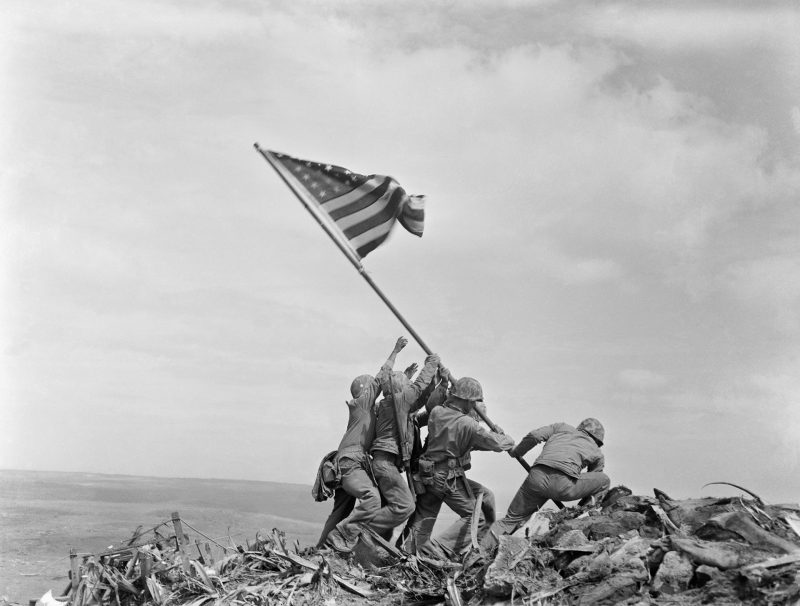
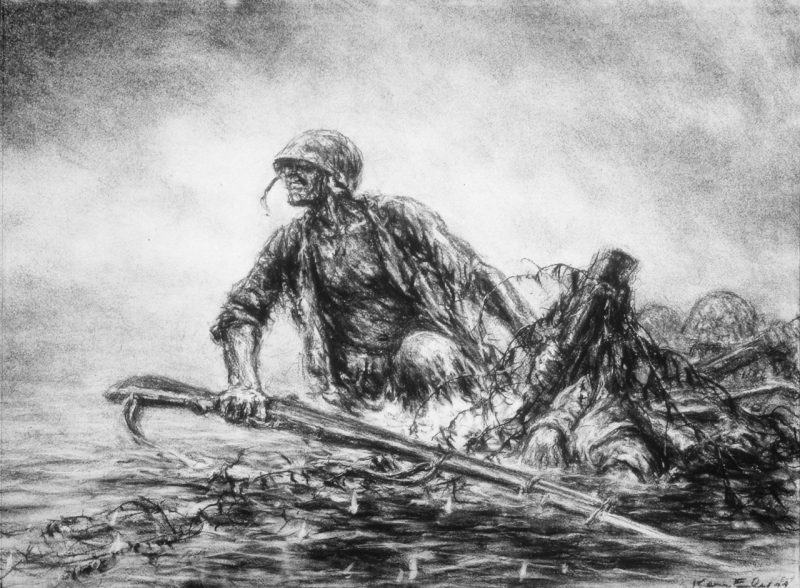
Ask almost anyone what image they associate with Marines in World War II and they’ll say, “The flag on Iwo Jima.” There are good reasons for that: Joe Rosenthal’s iconic photo, maybe the most famous war photo ever taken, captures the brotherhood, glory, and struggle of war in a way few others ever have. However, it may not be the image that best exemplifies the spirit of the Marine Corps during WWII; that image was drawn, not captured on film, over a year before the flag was raised on Mount Suribachi.
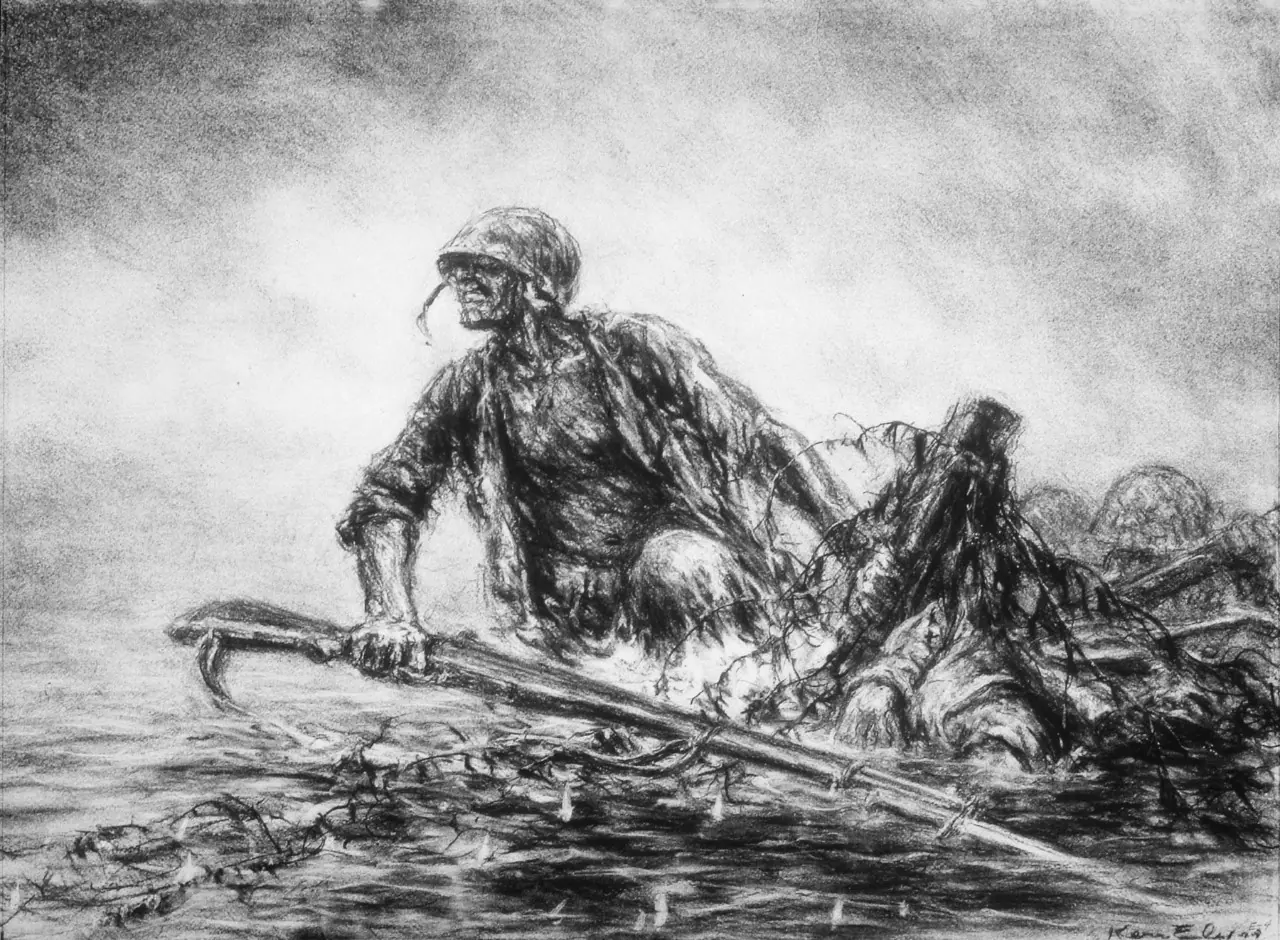
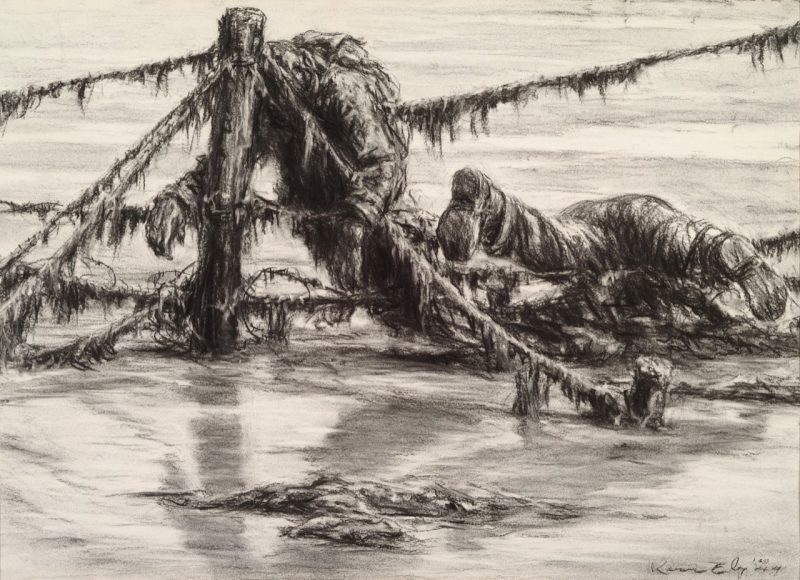
That drawing was Bullets and Barbed Wire by Kerr Eby, which you can see at the very beginning of this article.
The Battle of Tarawa
The invasion of Betio Island, in the tiny, remote, and desolate Tarawa Atoll, began on November 20th, 1943. The USMC campaigns prior to Tarawa had been mostly jungle fights on large islands that unfolded at a fairly slow pace. But Betio Island, with its valuable airstrip, had sparse vegetation, was only 291 square acres, and was so narrow that a golf ball could have been hit across it at any spot along its length. Japanese troops, with Japanese and Korean construction laborers, had spent nearly a year turning Betio into a fortified warren of bunkers, pillboxes, tunnels, and trenches.
The combined military/labor force defending Betio comprised almost 5000 men, supplemented by fourteen tanks, forty artillery pieces, and fourteen naval guns on ground mounts. Nearly every defender, whether soldier or laborer, was prepared to fight to the death. The Japanese commander, Rear Admiral Keiji Shibazaki, vowed, “A million Marines couldn’t take Tarawa in a hundred years.”
The force poised to attack Betio on November 20, 1943, consisted of over 35,000 men, including 18,000 Marines (and, though many today don’t know it, Soldiers from the Army’s 27th Infantry Division). Betio had a shallow lagoon surrounded by a coral reef approximately 500 yards offshore; tracked landing vehicles would have no problem crossing it, but shallow-draft Higgins Boats couldn’t, except at high tide.
This was a major hurdle, since the Marines had relatively few tracked vehicles and would land the majority of troops by Higgins Boats. Planners carefully checked tidal charts and scheduled the assault for a time when Higgins Boats would have plenty of clearance over the reef. But even without the reef, Marines disembarking onto a barren beach under fire from thousands of entrenched and fanatical Japanese troops could expect one hell of a hard fight.
One of the men crammed in the back of a Higgins Boat puttering toward Tarawa on November 20th was named Kerr Eby. Eby, like Joe Rosenthal at Iwo Jima, was there to document the battle and wasn’t a Marine or a military man at all. However, unlike Rosenthal, Eby was a combat artist, not a photographer, who Abbott Laboratories contracted to accompany the Marines.
Eby’s life before Tarawa had been, to say the least, unusual. Born in Japan to Canadian missionary parents, Eby moved to the United States as a teen, joined the U.S. Army in 1917, went to Europe to fight in The Great War, and first served on an ambulance before becoming a combat engineer “camofleur.” A gifted artist, Eby drew many sketches of what he witnessed in combat, most of which were lost in the war’s chaos. Those WWI sketches that survived or were drawn from memory later, like Mama’s Boy below, show Eby’s style of combat artistry: raw, honest, unsparing, and brutal.
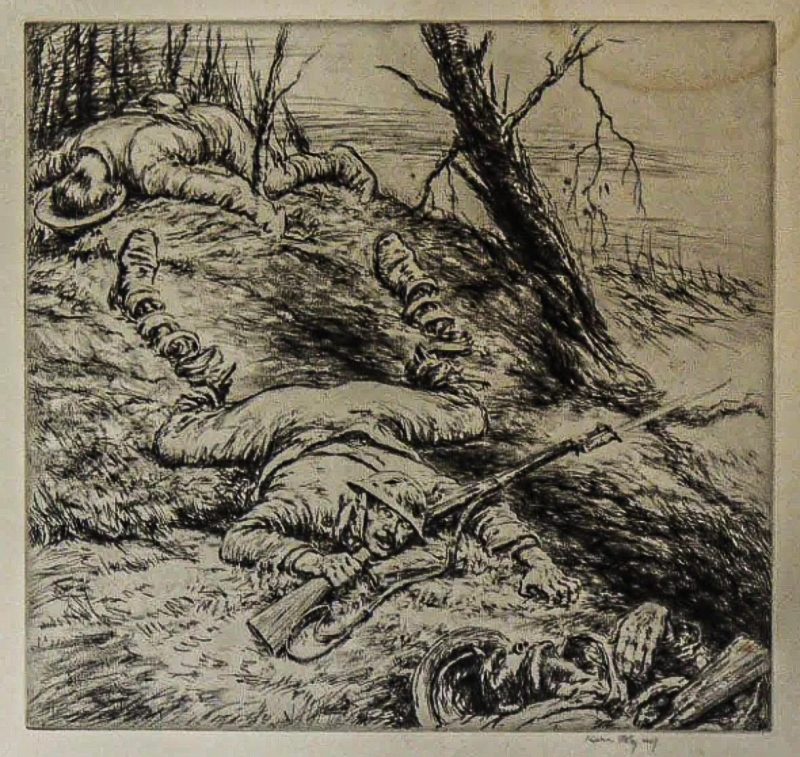
After the war’s end Eby settled in New England and became an ardent anti-war activist. But when World War II began, Eby, over fifty years old, tried to reenlist. Rejected due to age, he instead took the contract with Abbot Laboratories, who had the ulterior motive of wanting him to draw “in use” pictures of the blood plasma they were providing to the U.S. military. At least once, during one of the jungle fights, he did. But on November 20th, 1943, as he clambered down the rope ladder from a transport into a landing craft, 54 year-old Eby probably wasn’t thinking about plasma.
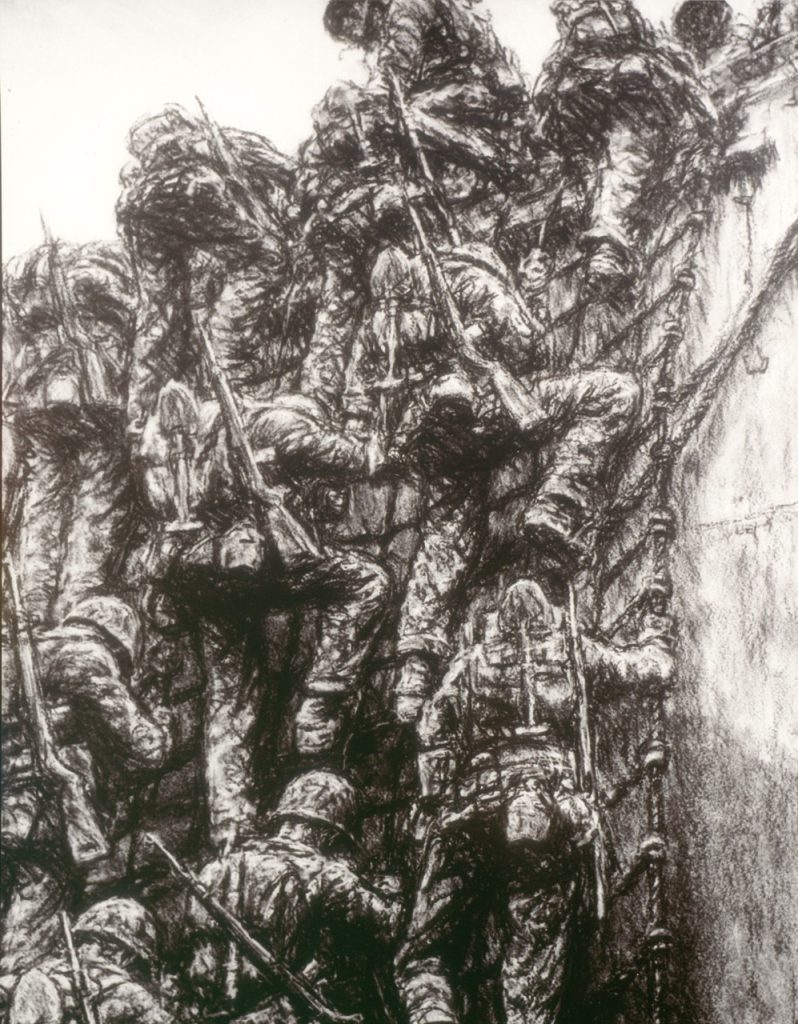
After the preparatory bombardment the Marines and Eby began moving toward the designated invasion beaches. The tracked landing vehicles reached the coral reef, their tracks bit, and they clambered over. But the Higgins Boats, rather than gliding over a reef covered by several feet of water, hit it and were stopped cold. The tide wasn’t what the planners expected, and the bulk of the invasion force was stuck half a kilometer offshore. Being Marines, they offloaded their gear and weapons and began the long slog through the lagoon. Kerr Eby, more than twice the age of most Marines around him and with his WWI experience 25 years past, went right along with them.
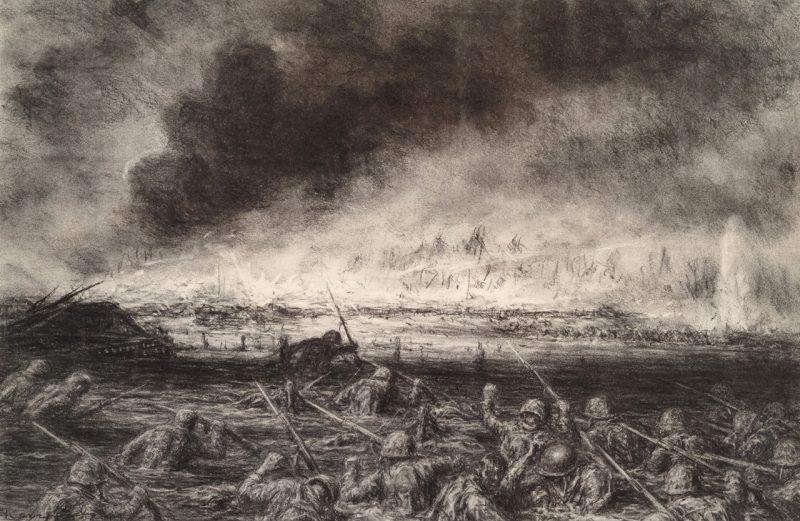
The lagoon was shallow enough that most Marines had no trouble keeping their heads above water, but drowning was almost the least of their worries. Machine guns and snipers firing from emplacements on shore, from a long pier jutting into the lagoon, and from a derelict freighter, along with relentless mortar fire, mowed down hundreds of men.
Japanese artillery and naval guns blew landing craft to pieces, usually killing every last man inside. Japanese tanks engaged struggling Marines with main guns and coaxial machine guns. Platoons and squads lost cohesion as leaders were hit and disappeared into the surf. Acrid smoke rolled over men desperately trying to stay low in the water as bullets and shrapnel slashed the water around them. Exhausted Marines, barely able to stagger forward, had to abandon weapons and equipment. Under fire from multiple directions by hundreds of light and heavy enemy weapons, they took hours to reach the beach.
Actor Eddie Albert of Green Acres fame, a Naval officer at Tarawa, was piloting an appropriated landing craft to pick up wounded and recalled offering to rescue a group of stranded Marines; the Marines, who had lost their weapons, refused but asked him to come back with rifles. When Albert did circle back, he found those Marines all dead.
The few Marines who did manage to stagger onto shore were barely hanging on. Reports from the beachhead were brief, truncated messages like:
- “Unusually heavy opposition. Casualties 70 percent. Can’t hold.”
- “We need help; situation bad.”
And, in ominous understatement,
- “Issue in doubt.”
The latter message was actually sent twice: once from Maj. Schoettel of 3/2 Marines to Colonel David Shoup, commanding the 2nd Marines assault, and later from Julian Smith to the commander of V Amphibious Corps, MGen. Holland Smith.
- “Request releast of Combat Team 6. Issue in doubt.”
RADIO TRANSMISSIONS, 20 NOV 43
…
0959 – Major Schoettel (3/2 Marines) to Colonel Shoup (2nd Marines, assault commander): Receiving heavy fire all along beach. Unable
to land all. Issue in doubt.
1007 – Schoettel to Shoup: Boats held up on reef of right flank Red One. Troops
receiving heavy fire in water.
1015 – Colonel Shoup to Major Schoettel: Land Beach Red Two and work west.
1018 – Schoettel back to Shoup: We have nothing left to land.…
The words “Issue in Doubt” had only been spoken once before; at Wake Island, which was being overwhelmed by the Japanese. It’s a phrase that means in all likelihood a mission is on the brink of failure, with defeat imminent. These words must have chilled the blood of the command staff out aboard the USS Maryland.
Kerr Eby, struggling toward the beach beside the Marines, took in sights never seen before and, thankfully, not seen since.
One of those sights stood out. Unlike Joe Rosenthal’s captured icons of heroism and glory at Iwo Jima, this one particular image that Eby captured with only his mind’s eye embodied something else.

Rep the Old Breed – rep YOUR breed – with one of our Marine shirts.
Making It Ashore: Bullets and Barbed Wire
Eby saw, and later drew with incredible accuracy, the hatred and fury of an exhausted, drenched, dirty, young Marine infantryman. That infantryman, name and fate lost to history, had probably been a farmer, laborer or even high school student only a year or two earlier. His heavy gear had been abandoned, and his uniform top, maybe ripped by an obstacle or unbuttoned to alleviate heat, hung open. His bayonet was mounted and ready to impale despised enemy, the enemy he focused on as he trudged past mangled barbed wire, the wounded, and the dead. One grimy hand gripped the remnants of a wooden post, maybe as he took a half-second to rest before forcing his legs upward and forward again.
Eby captured the face and spirit of the American fighting man, the look of a warrior who wouldn’t quit, no matter what horror erupted around him and lay before him, the not-quite-definable ingredient that separates those who are normal and average from those who earn the Eagle, Globe and Anchor in battle. Eby drew many incredible works of combat art, but this one stands out. He called it Bullets and Barbed Wire.
Eby and those men in the first waves who did finally reach Betio’s shore may have thought the worst was over. They were wrong. The small force barely held their ground overnight, and day two was a repeat of day one: not enough tracked vehicles, Higgins Boats unable to negotiate the reef, Marines being slaughtered as they took hours to stagger through the lagoon under murderous fire. All the while, at horrible cost, Marines ashore shot, dug, blasted, and burned the Japanese defenders from their fortifications. Eby’s photographic memory captured those sights as well.
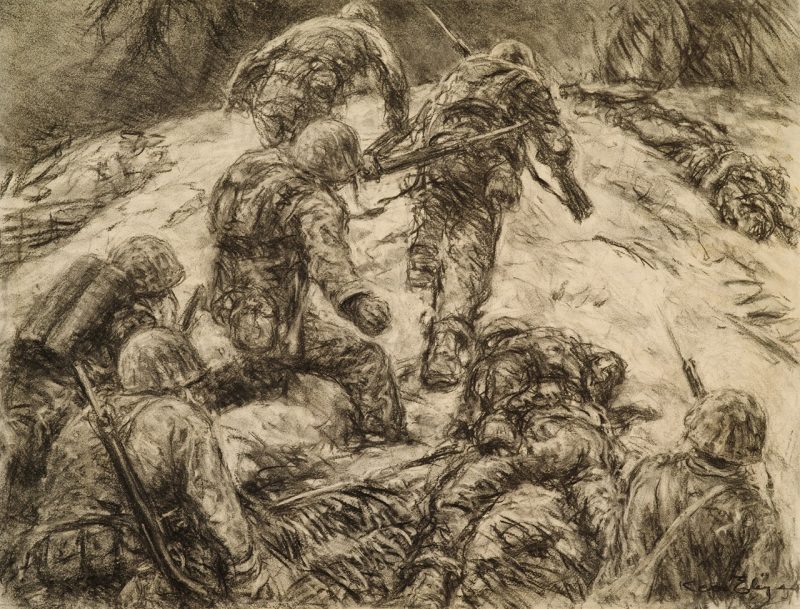
By the time Betio was finally declared secure on November 23rd, nearly 4700 Japanese defenders were dead and bloating in the tropical heat. 1,009 Marines and 687 Sailors died defeating them. According to some, considering the total number of troops involved, the casualties at Tarawa were proportionately higher than D-Day at Normandy.

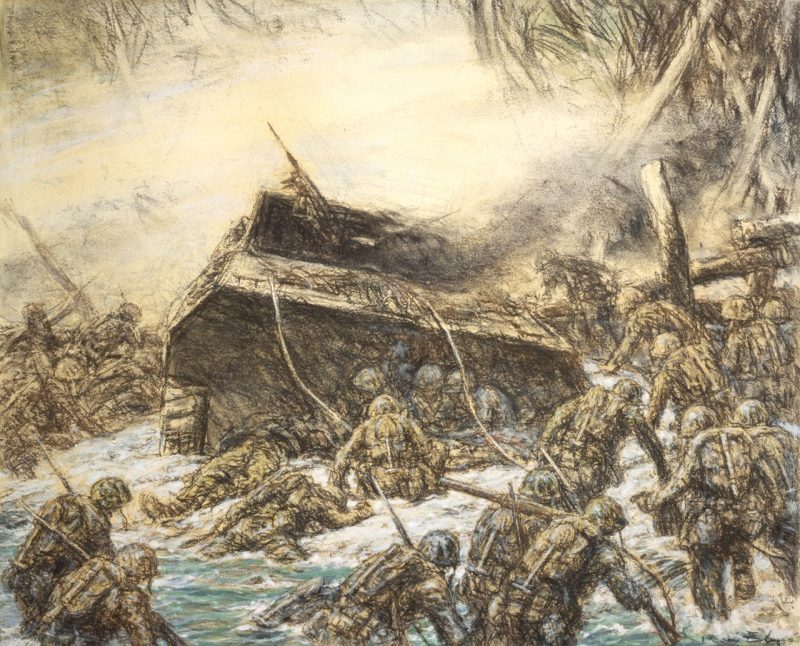
At some point, Eby had time to memorize and draw the Battle of Tarawa’s horrible aftermath. Regarding his drawing of fallen Marines sprawled inside a destroyed landing craft, Eby said, “I make no apology for drawings such as this. The official designation of my job was ‘activities of the Marines,’ and dying terribly and magnificently is one of those activities.”
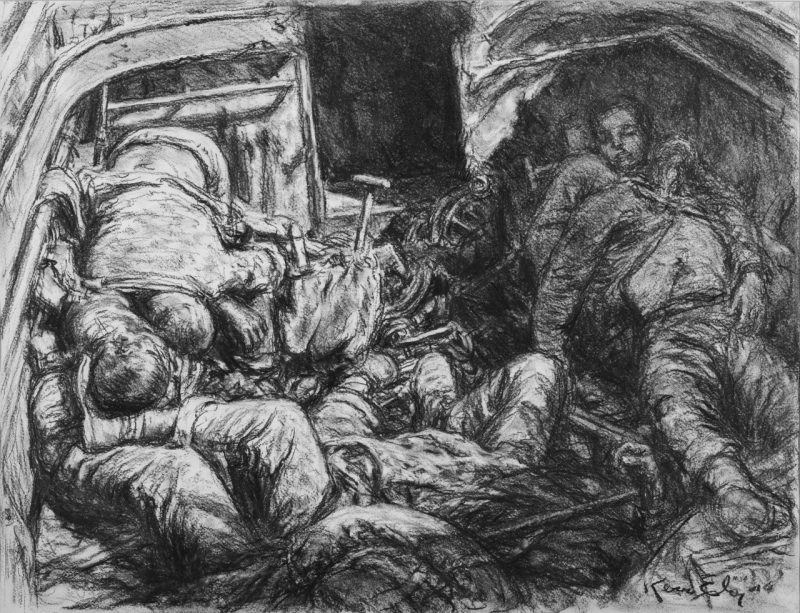
As far as I can tell, the Battle of Tarawa was Eby’s last campaign. After surviving the battle and the war, he returned home to his beloved New England. It was there, in 1946, that the war killed him. He’d contracted an unnamed tropical disease on the island of Bougainville, before Tarawa; at age 57, that disease managed to finally do what the Germans and Japanese had failed to.
Just like the young Marines who’d fallen around him at Tarawa, Kerr Eby was gone too soon, and with him the treasured works of art he would have drawn if he’d lived to be an old man, as he undoubtedly deserved to. But we can thank Kerr for giving the Corps an everlasting gift.
In Bullets and Barbed Wire, Eby showed America the face of its saviors. He introduced it to one of, or all of, the “rough men” who allow the public to sleep peacefully in their beds at night. He drew the perfect, archetypal Marine, the relentless warrior who fought in the American Revolution, at Chapultapec, in Tripoli, World War I, World War II, Korea, Vietnam, Desert Storm, Iraq, and Afghanistan.
For those of us who had the good fortune to bear the title “Marine,” he showed us who we’d be if and when our country asked us to cross that lagoon under fire. And I, for one, thank Kerr for drawing that Marine, and thank that Marine for being who he was.
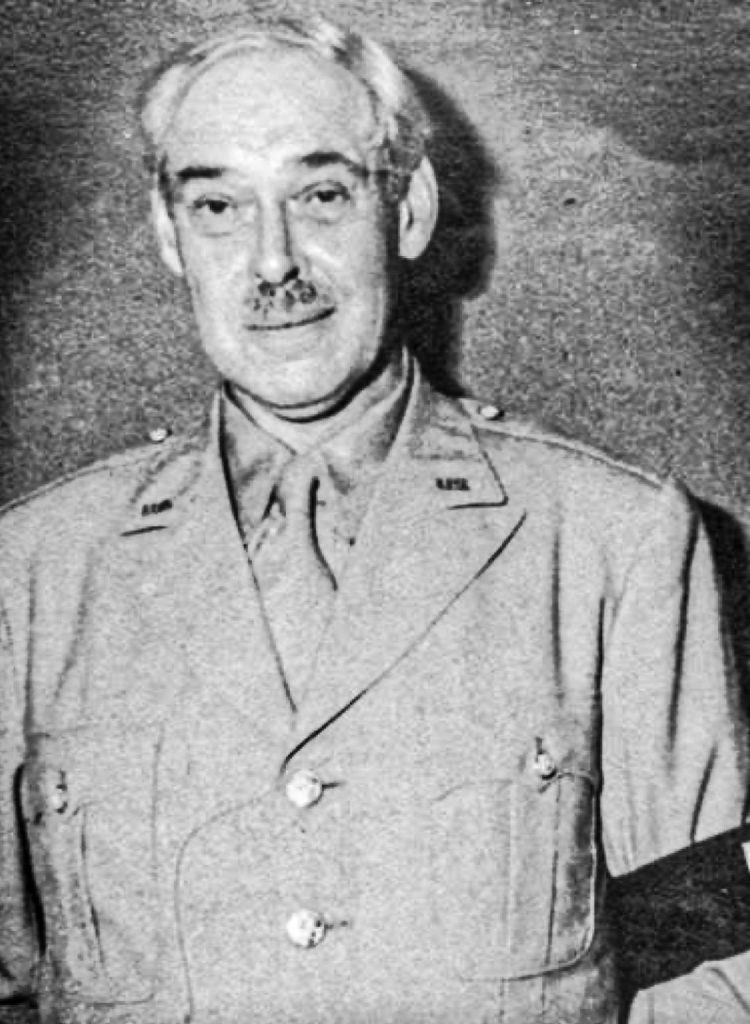
Semper Fi, Mr. Eby. And happy 250th birthday to our beloved Corps.
Honor the legacy and read the definitive Marine Corps birthday timeline.
Read more from the Jarheads and Gyrenes series.
Marines in Action
…
Since the first day of World War II, the American public has had occasion to read a good deal about the Marine Corps and to see Marines in action as portrayed by the camera. But no insight thus afforded can compare with that offered by the work by Kerr Eby.
…
For long months this distinguished artist, no stranger to war, shared the dangerous life of the Marines in the Pacific. He landed with us at Tarawa, and he went from that terrible battleground to live with Marines fighting in the jungle warfare of Bougainville. He slept on the hard coral, he slogged through the jungle mud, he shared the minor pleasures and the major discomforts of the Marines at war, the good hot cup of coffee at the end of thirsty hours, the threat of enemy bombs and shells and bullets near him. Like many a Marine, he fell prey to tropical ills: one of his weeks in Bougainville was spent in a hospital.
…
Kerr Eby was with the Marines long enough to get the feeling of their war. With rapid sketches on the spot, whether in jungle skirmish or at beachhead landing or just living between battles, he used his art to capture that feeling and make it visible to all. It is small wonder, and yet it is the eternal miracle of art, that his finished paintings and drawings are so richly successful. They have caught the dramatic intensity and spirit of men at war, the feeling of men in battle, the sludging through the jungle and the terrible murky heat, the charge on the pillbox, the savagery, the terror, the exhaustion of battle.
…
Kerr Eby has made a great contribution. The Marine Corps and the public are in his debt. If he has somewhere expressed a high opinion of the Marines, let us for our part make public declaration that it is mutual, both for the life he lived among us and for the work here presented.
…
~ Major General Julian C. Smith, USMC, commander of the amphibious assault at Tarawa, via history.navy.mil.





0 Comments