
Order, Counterorder, Disorder. Remember that? How about, “No plan survives contact with the enemy” – ? Here’s the thing. Preparation can preempt Murphy and ward off unnecessary mission fuckery. Today we’re happy to present this guest article for your education erudition, edification and entertainment (grunts: erudition). This enlightening event comes courtesy of our buddy Pete Nealen, former Reconnaissance Marine, Eagle Scout, bearded new daddy (congrats Pete) and soon-to-be-bestselling author of Task Force Desperate. Read it and benefit thereby.
Mission Planning and Prep
by Pete Nealen
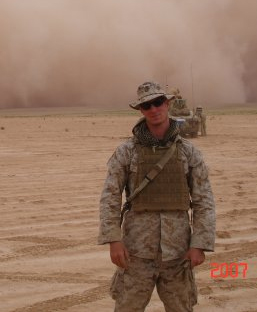 First off, a disclaimer. My rants are about 50/50 stuff I thought of at the time, and stuff I’ve been guilty of, presented as a way to learn from my mistakes. This post is going to be heavy on the latter.
The standard for mission prep when I was in Recon was the MSPF (Maritime Special Purpose Force) standard of 6 hours from Warning Order to step-off. That’s not a lot of time. However, operationally, that standard was rarely kept to. One mission was almost two weeks in the planning stages before we got on the birds and headed out. Either way, there are some trends that present problems.
Most of the time, the Team Leader is sequestered away, working on the patrol order. Various preparatory tasks are farmed out to the other members of the team. Maybe an hour before step-off, the team receives the order, and finishes the last few prep items before getting on the insert platform.
The problem with this is that a lot of the time, the team members are going into an op with only the most cursory knowledge of any aspect of the operation that they weren’t personally involved with during mission prep. The point man and the TL know the terrain and the route, but everybody else really just knows what they learned at the order. The Radio Operator and his assistant might have the comm plan memorized, but it’s rare that the point man does. Ultimately, the only one who really knows everything that’s going on is the Team Leader, and most of his energy during mission prep has been preparing the brief for higher.
This is of course a blanket statement, and if anybody is already way ahead of me, good on you. But I’ve seen it enough times to see a pattern.

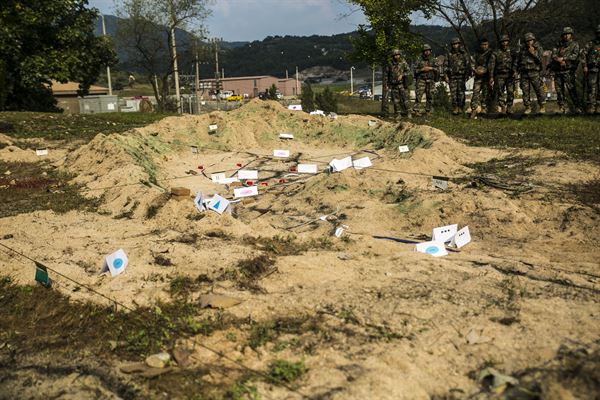
The entire team has to be an integral part of the planning. Having the team leaders sequestered for days, while the rest of the team is essentially told to “prep gear, PT, and hang out,” is counterproductive. The whole team has to have maps and imagery, if available, of the AO. Sand tables need to be the first thing built as soon as an AO is known, and they have to be studied constantly. An instructor of mine once said, “If you’re not navigating, you’re lost.” Every member of the team should be navigating on movement, and should always know where they are. This takes some study beforehand.
A certain amount of time has to be devoted to making sure everybody knows the comm plan inside and out. I’ve been out on patrols where only the RO really knew the comm plan. Comm is your lifeline, and if something happens to the RO, and he’s the only one who knows the comm piece, you just failed.
Short version, everyone on the team should know everyone else’s job, from slack man to Team Leader. Once you leave the wire, or get on the bird and leave the ship, Murphy is officially in charge. Anything can go wrong, and if you’re not prepared for anything to go wrong, you are putting the accomplishment of the mission in jeopardy.
Now, part of the reason this pattern has developed is because there’s a lot of work involved with prepping gear. When you have only six hours from WARNO to departure, that can be a pretty short time to get everything set. That’s why you have to do some work in the rear, during training, to streamline that process.
Work out what you need, that doesn’t have to be drawn the day of the op. Have your gear packed and ready to go at all times. Draw four days’ supply of chow before a warning order even comes up, and have it already in your ruck. They’re MREs, they’re not going to go bad anytime soon. Make sure your water’s full. Set SOP for what four days’ supply is, based on experience in training, and keep that in your ruck. Then all you need to draw is ammo, pyro, demo, and comm. No vital mission planning time is wasted packing rucks.
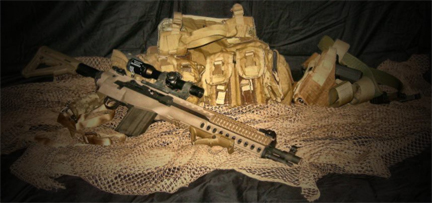
 There’s a rule of thumb for after-mission: Weapon, Gear, Self. Make part of the Gear portion repacking your kit to head right back out. Use your down time to maximize your planning time.
The more the whole unit knows the score, the better your chances of mission accomplishment. It aids situational awareness, too, which can be vital when downrange.
Square things away in training, get it wired tight, and then get some. Yes, this is the way it’s supposed to be, by the book, but it rarely works out that way. It takes some effort, and some trust in your subordinates, to make it happen.
Pete Nealen
Mad Duo, Breach-Bang& CLEAR!
Comms Plan
Primary: Subscribe to our newsletter here, get the RSS feed and support us on Patreon right here.
Alternate: Join us on Facebook here or check us out on Instagram here.
Contingency: Exercise your inner perv with us on Tumblr here, follow us on Twitter here or connect on Google + here.
Emergency: Activate firefly, deploy green (or brown) star cluster, get your wank sock out of your ruck and stand by ’til we come get you.
A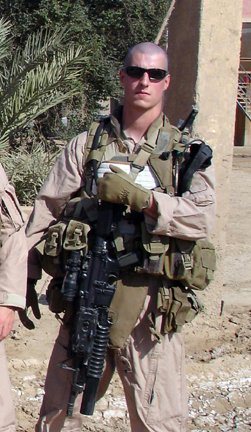 bout the Author: Pete Nealen is a former Reconnaissance Marine, a combat veteran of both Iraq and Afghanistan and the author of several books. A contributor here at Breach-Bang-Clear for many years now, Pete is a bad ass writer who continues to make the Duo’s efforts look pale and feeble (if less gritty and jaw-clenching-y) by comparison. You can follow Nealan on his own blog, American Praetorians. We encourage you to do so here. His author page on Facebook is at https://www.facebook.com/PeteNealenAuthor. If you’d like to read some of his books, you can start the American Praetorians series (about a PMC in a post Greater Depression dystopia now 4 books long) with Task Force Desperate. He has a standalone action novel called Kill Yuan, which you can find here. You could also do worse than to start reading the Jed Horn series (a supernatural shoot ’em up series now on its 3rd volume) with Nightmares, then proceed with Silver Cross and a Winchester and Walker on the Hills and . His fiction is widely claimed for the realism of its combat scenes — this is no doubt because he hangs around with us. It could also have something to do with his skill as a writer and his background (multiple deployments, qualifications as a Combatant Diver, Navy/Marine Corps Parachutist, Marine Scout/Sniper and S/S team leader, Combat Tracker, et al). Continue below to see the only picture of Nealen smiling
Ever.
Fortis cadere, cedere non potest.

Read a review of Pete’s novel by one of our groveling minions writing team here: http://kitup.military.com/2013/01/peter-nealans-task-force-desperate.html
On Facebook at https://www.facebook.com/TaskForceDesperate
Mad Duo Clear!




0 Comments