In June 1966, a significant portion of the 1st Marine Division’s Area of Operations (AO) included the provinces of Quang Ngai and Quang Tin, in the southern portion of the I Corps Military Region. Straddling the two are the hills of Que Son Valley, including Nui Vu: also known as Hill 488.. Reports of North Vietnamese forces moving into the strategically important valley in mid-June necessitated a response. General Lewis Walt, III, Amphibious Force and 3rd Marine Division commander, deployed elements of 1st Recon Battalion, including a team led by SSgt Jimmie Howard, to the valley.
Initial intelligence pointed to the main-force 620th NVA Division, consisting of two NVA regiments and one VC, gathering in multiple small units numbering in the thousands in the vicinity of the Que Son Valley. These formations were reportedly crossing the boundary between Quang Tim and Quang Nam, northwest of Chu Lai. General Walt launched Operation Kansas to counteract them. A fertile, rice-rich and populous farming area, the Que Son Valley was the strategic lynchpin of I Corps. The Battle of Hill 488 would soon become the most intense action of this effort.
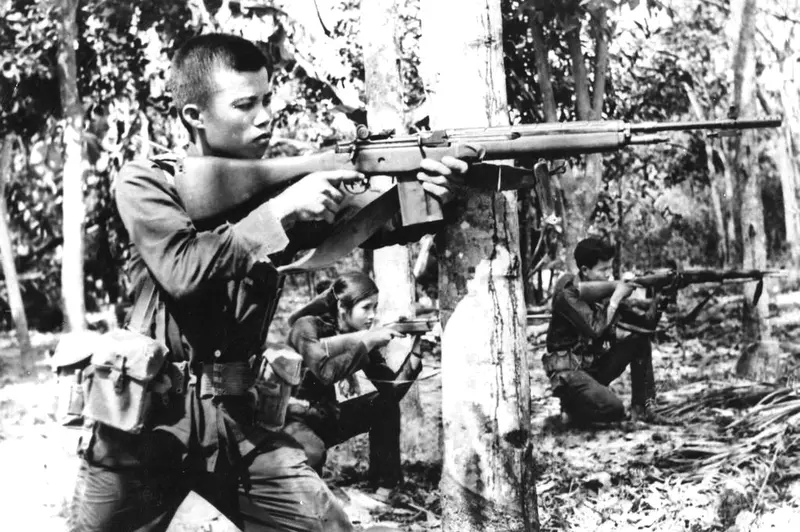
Since the North Vietnamese weren’t using large base areas, Walt decided on a strategy somewhat different from a large unit sweep.
Instead, Marine Reconnaissance was tasked with inserting small teams to scout the hills. Were they to find small units of Communists, they had PRC-25 radios to call in air and artillery. Should they find one of the larger concentrations of North Vietnamese troops, they would report back and bring in Marine infantry by helicopter.
1st Reconnaissance Battalion Gets the Duty
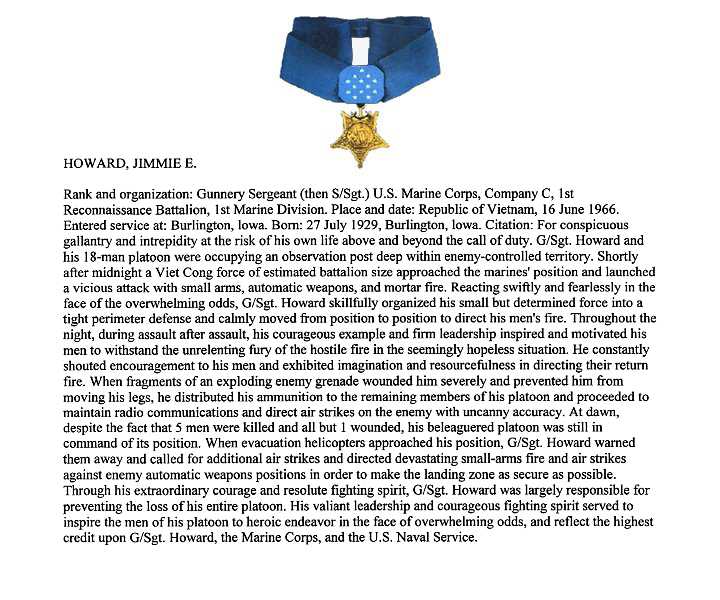
On the evening of the 13th of June, 1966, Lt. Col. Sullivan, 1st Recon Battalion’s commanding officer, inserted at Nui Loc Son and set up his command post. That same evening, Team 2, an 18-man recon platoon of C Company, 1st Recon Battalion, led by SSgt Jimmie Howard, inserted on Nui Vu (Hill 488).
They were not alone. That same night, a team from 1st Force Reconnaissance Company parachuted onto Hill 555, to set up their own observation post. One man was injured on landing, but the insertion went without incident otherwise.
The following night, two more teams from 1st Recon Battalion also inserted on other surrounding hills.
The Force team was extracted first, as a woodcutter had found one of their parachutes and alerted the North Vietnamese. The Force Recon Marines observed the woodcutter talking to the leaders of a 40-man unit that appeared to be conducting tactical training within the team’s line of sight.
All of the teams were spotting enemy movement. For the next two days, Jimmie Howard and his Team 2 called in artillery strikes from an ARVN (Army of the Republic of VietNam) 105mm artillery battery.
The top of Hill 488 was relatively barren, with only low scrub to provide any concealment, and it was an obvious observation point. Lt. Col. Sullivan was concerned that it was a little too obvious, and so not all of the fire missions the Marines called in were approved. This was an attempt to make it less obvious that the North Vietnamese were under constant observation. Howard made an effort to time his calls for fire for when there were observation planes or helicopters overhead, potentially leading the enemy to think that they were being spotted from the air, rather than from the hill.
Even so, Lt. Col. Sullivan and his XO worried about the team being in place for two days—ordinarily a deadly sin in Reconnaissance. However, because the OP was so perfect and was giving an abundance of intelligence and fire on targets of opportunity, Jimmie Howard and Sullivan agreed to keep the team in place for one more day.
However, the game was up, as the North Vietnamese recognized the hill’s commanding position, the clear fields of view, and, in Lt. Col. Sullivan’s theory, they knew that Recon was out there, and wanted to destroy a Recon team, to demoralize the others.
On the afternoon of June 15, a two-man Special Forces team leading a Civilian Irregular Defense Forces platoon detected hundreds of North Vietnamese troops climbing Hill 488. They radioed in, alerting not only their own command but also SSgt Howard, whose radio was set to the same frequency. The two Special Forces soldiers, Sergeant 1st Class Donald Reed and Specialist 5 Hardey Drande, wanted to engage, but found themselves dealing with a platoon of local militia who most definitely would not rush the North Vietnamese.
Howard called in his team leaders, set a central rally point, and gave instructions to fall back to it when they made contact with the enemy. With the teams alert and ready, they waited.

Rep the Old Breed – rep YOUR breed – with one of our Marine shirts.
The Battle of Hill 488 Begins
The first attack hit at just around 2200. The attacking forces were later identified as elemtnts of the 3rd and 21st Regiments of the 2nd NVA Division
Lance Corporal Ricardo Binns fired his rifle at a seemingly random bush, and the North Vietnamese soldier crawling forward using that bush as cover was killed, falling back down the hill. The Marines of Binns’s team threw grenades and fell back toward the central rally point.
The rest of the team fell back to the central outcrop, which had formed their assembly point. Howard quickly got them into a tight, 20-meter-wide perimeter, setting each Marine into his firing position.
When the enemy attacked the rocky knoll on Hill 488, they were within twenty feet of the Recon Marines’ positions.
The North Vietnamese led with a volley of grenades, some of them bouncing off the rocks, some failing to detonate, but others falling on Marines and exploding. Three 12.7mm machine guns and 60mm mortars provided further fire support for the assaulting North Vietnamese.
Every man wonders how he’ll react the first time he sees combat. Similarly, SSgt Howard wondered how his Marines, many of whom were young and inexperienced, would react.
As the North Vietnamese rose up and charged the knoll at the top of Hill 488, firing their AK-47s, throwing grenades, and screaming, they found out.
The Marines responded with a fusillade of M14 fire that cut down the assaulting North Vietnamese in short order, forcing the rest behind them to go to ground, dropping to find cover.
As the night wore on, small groups of North Vietnamese troops crawled forward to probe the Marines’ perimeter, tossing grenades at the Recondos’ redoubt. They were often answered with grenades in turn, and the US grenades were much more effective than the ChiCom stick grenades. Furthermore, the Marines were better at throwing them, often gauging the enemy’s location by sound and throwing a frag, answered by screams.
The Communists pulled back, and Howard got on the PRC-25 back to Lt. Col. Sullivan’s command post. “You’ve got to get us out of here. There are too many of them for my people.”
Sullivan called the 1st Marine Division Direct Air Support Center and demanded flare ships, gunships, and fixed-wing attack aircraft to provide fire support for the men fighting the Battle of Hill 488.
Yet by just before midnight, the aircraft still had not arrived. And the North Vietnamese attacked in force again.
The Marines threw the last of their hand grenades and fired their rifles on semiautomatic, conserving ammunition and hoping for accuracy to trump numbers and volume of fire. They beat back the assault, but at the cost of every Marine being wounded.
As they redistributed the ammunition from the dead, Howard considered their situation. They were unlikely to be able to repel another massed assault. He could hear the enemy calling out their taunts, warning the Marines that they were soon going to die, down in the dark below the hill.
In response, he got his Recon Marines to taunt the enemy back, yelling every bit of invective and profanity out into the night they knew. And then, he got them to laugh at the enemy, just to show the North Vietnamese that they weren’t demoralized or broken—and therefore were not a good prospect for a third assault.
At 0100, an Air Force flare ship arrived on station and started dropping illumination. As they looked out into the valley, the Marines saw that North Vietnamese reinforcements outnumbered them by hundreds to one. “There were so many, it was just like an anthill ripped apart. They were all over the place,” said Lance Corporal Joseph Kosoglow.
With illum overhead, the jets and helicopter gunships that had been circling overhead without being able to see the enemy, on the radio with Howard but unable to help, descended on the North Vietnamese.
“There were so many, it was just like an anthill ripped apart.”
Rockets, bombs, napalm, and machine gun fire raked the enemy force, with gunships (including Marine assets of VMO-2 and VMO-6) dropping to 20 feet on their strafing runs. Napalm was dropped within 100 yards of the Marine positions, trying to keep the North Vietnamese off them.
Two Hueys stayed overhead all night, directing air support, though at least one was struck by ground fire in the process. With Howard marking their position with a filtered flashlight, gunships strafed as close as 25 yards to the rocky knoll.
The enemy had learned to “hug” US forces to avoid air support, though, and the fight continued at close range, often at ranges of less than 30 feet. The North Vietnamese would crawl toward the Marine positions, and the Marines would throw rocks, since they were out of grenades, hoping to smoke the enemy out of cover, then either engage them on the move, or identify the position they’d moved to, shift and aim in, and kill the enemy soldier when he got up to move. With ammunition critical, they kept to single shots, making every round count.
In the dark, when the flares faded, each man found himself alone. How some of the Marines died will never be known. One was found propped up against a rock, a dead Communist soldier in front of him, their muzzles touching each other’s chests. Some Marines fought with their entrenching tools.
At 0300, H34 helicopters came in to extract the Recon Marines, but were forced off by heavy fire, and Howard was informed he would have to fight on until dawn. Shortly thereafter, he was hit in the back by a ricochet, losing the use of his legs. He came back strong on the radio, and for the rest of the night, he crawled from position to position, keeping his remaining Marines alert and encouraged.
The fire became more sporadic as the night waned. But the enemy was still out there, despite the litter of bodies and equipment all over the slopes of Nui Vu, Hill 488. They were dug in and gone to ground, still determined to wipe out Team 2.
Early that morning, Major William J. Goodsell attempted to fly in a medevac Huey, lured in by the lack of fire until his bird was hit by a storm of machine gun fire. His copilot, 1st Lt. Stephen Butler, was able to get the Huey under control, but Maj. Goodsell died of his wounds before he could reach the hospital.
Air support, unfettered by darkness now, swooped down in revenge. Another Huey was lost, but the air support destroyed the heavy machine guns that the North Vietnamese had been battering the hill with.
While they had been delayed by heavy fire, forced to circle for 45 minutes as jets cleared a landing zone, Charlie Company, 5th Marines, was en route, and as soon as they landed, they moved up the hill, clearing out resistance as they went. Howard and his men met them at the top, Howard warning 2nd Lt. Meyer to stay down because there were snipers still taking them under fire.
The surviving Recon Marines asked their brother Marines if they’d brought cigarettes.
Howard, despite his wounds, took charge, directing the defense of the hill. The fire on the slopes was still intense, and Charlie Company lost two Marines as they slowly secured the slopes. Howard’s Team 2 had lost six, and of the remaining 12, all were wounded. The North Vietnamese had left behind 42 dead and 19 weapons.
The six dead 1st Recon Battalion Team 2, Battle of Hill 488
- Cpl Jerrald R Thompson, Navy Cross
- LCpl John T Adams, Navy Cross
- LCpl Alcadio N Mascarenas, Silver Star
- PFC Ignatius Carlisi, Silver Star
- PFC James O McKinney, Silver Star
- PFC Thomas D Glawe, Silver Star
Other Casualties, Battle of Hill 488
The two dead of Charlie Company, 5th Marines:
- 2nd Lt Ronald W Meyer, Silver Star
- LCpl Terry P Redi
VMO-2 and VMO-6 each lost one:
- Major William J Goodsell, VMO-6, Navy Cross
- PFC Leo B Buckholdt, VMO-2
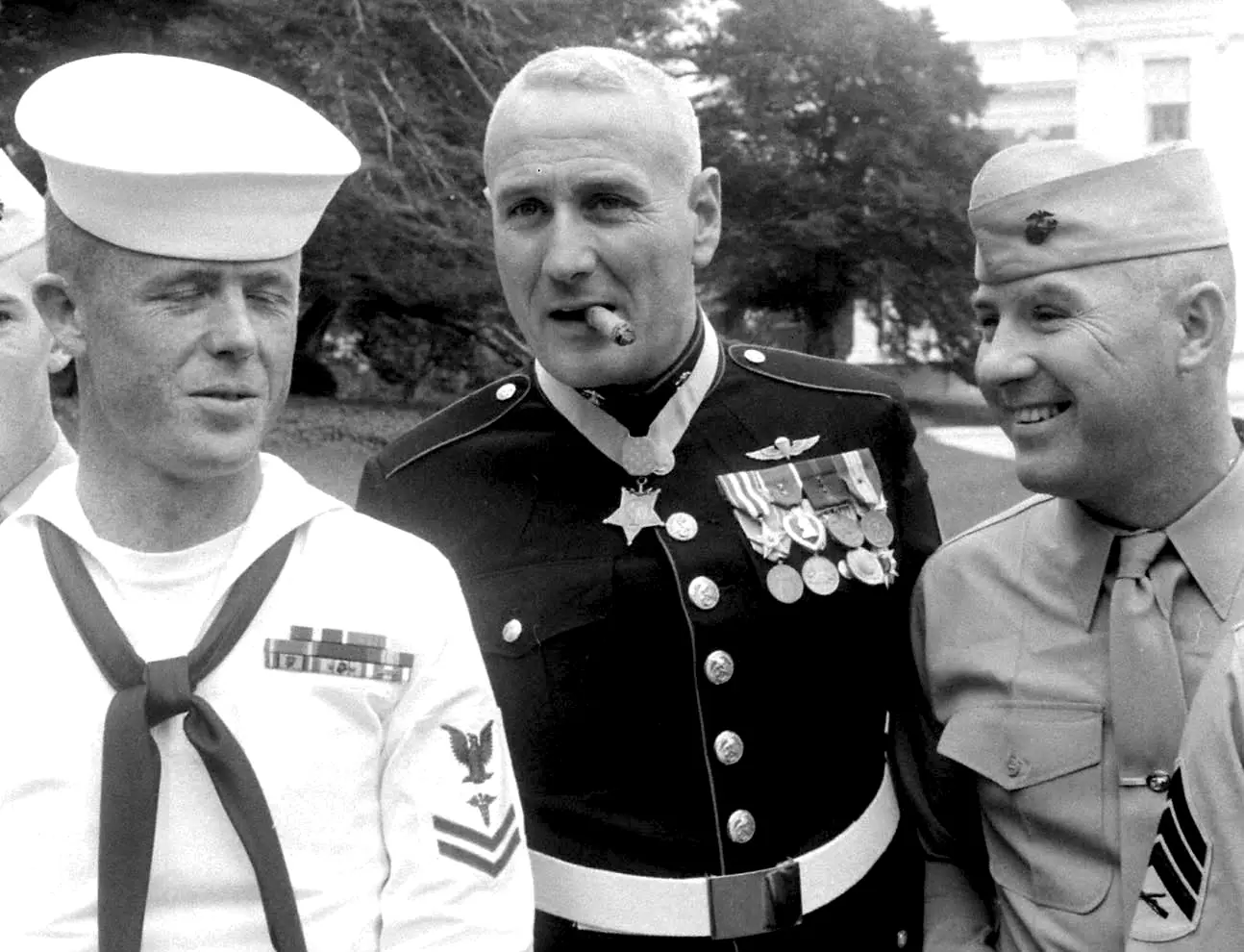
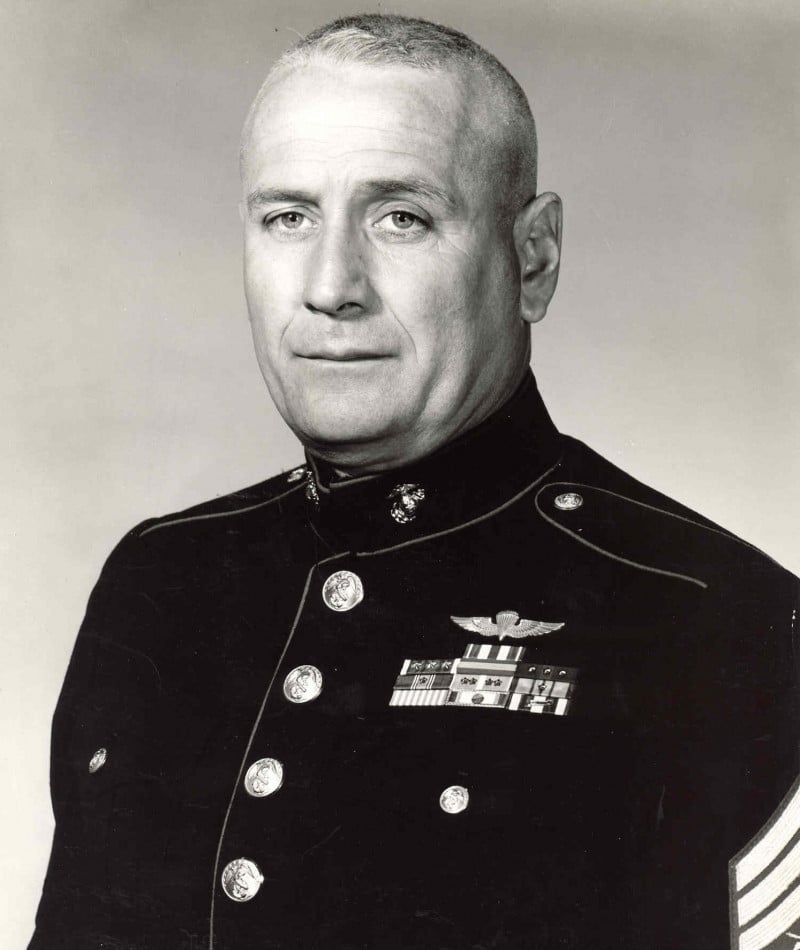
SSgt Jimmie Howard was subsequently awarded the Medal of Honor.
Honor the legacy and read the definitive Marine Corps birthday timeline.
Read more from the Jarheads and Gyrenes series.


Bad ass MF!