
Yes, we’re using a staple gun comparison for the Hk P7, and we’re not even referencing Office Space. Meet the Heckler and Koch P7. Mad Duo
Hk P7: Heckler and Koch P7 Semi-Auto Tactical Staple Gun
The Heckler & Koch P7-series of pistols was a unique design developed for the German military, which wanted a semiautomatic pistol capable of being drawn and fired like a revolver without external safety mechanisms. The first version was the HK PSP (Police Self-loading Pistol), which debuted in 1979.

The P7 differs from a traditional John Browning design by making use of a fixed barrel, which aids in the P7’s accuracy. The P7 has a fluted chamber which helps the extraction of a fired case by allowing gas to flow around the cartridge and keep cases from getting stuck. The P7 series operates on a delayed blowback system; gas pressures from the fired cartridge and are diverted through a port in the barrel before the chamber to slow the rearward movement of the slide. A piston located under the barrel works in opposition to the motion of the slide until the pressure decreases with an ejected casing.
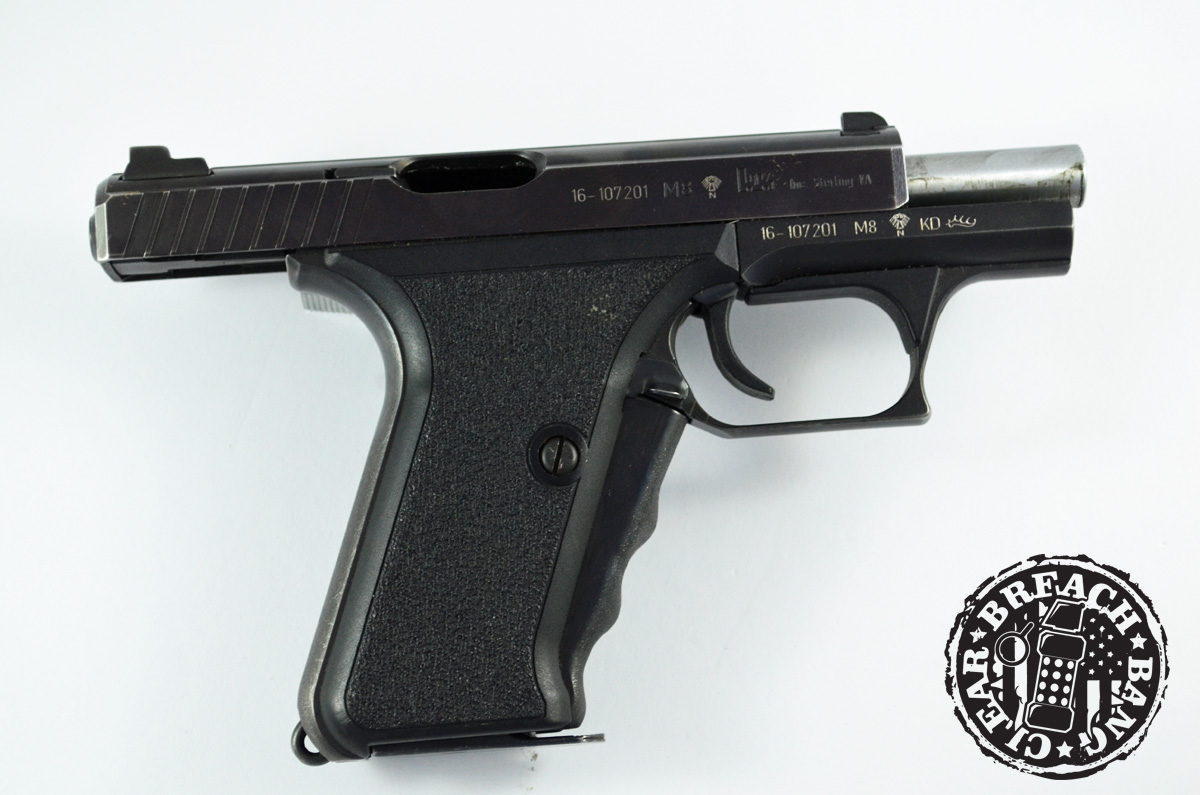
What makes the P7 most unique among handguns is its “squeeze-cocking mechanism”. A finger grooved lever sits on the entire front of the pistol’s grip. When the shooter squeezes this lever it performs two functions: if the slide is to the rear, it releases it to chamber a new round. If the pistol is loaded with a chambered round it cocks the gun and makes it ready to fire. Releasing the lever decocks the pistol. This feature lends to the pistol’s nickname: The tactical staple gun.
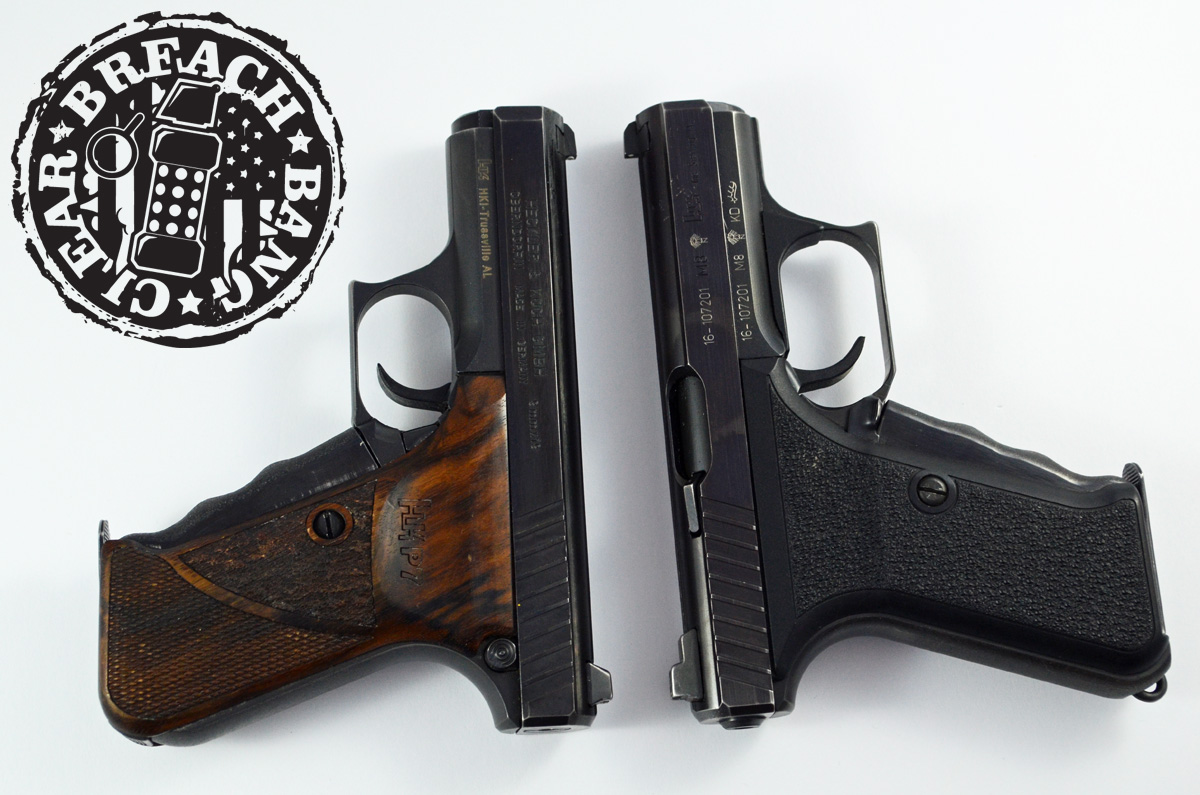
Heckler & Koch made a few changes in 1983 to make the P7 appeal to the US shooting public. The heel type magazine release was eliminated in favor of an ambidextrous magazine release below the trigger guard and a lanyard ring was placed on the butt of the pistol. To address complaints of the frame heating up after long sessions of firing the pistol, a heat shield was installed. This version became known as the P7M8.
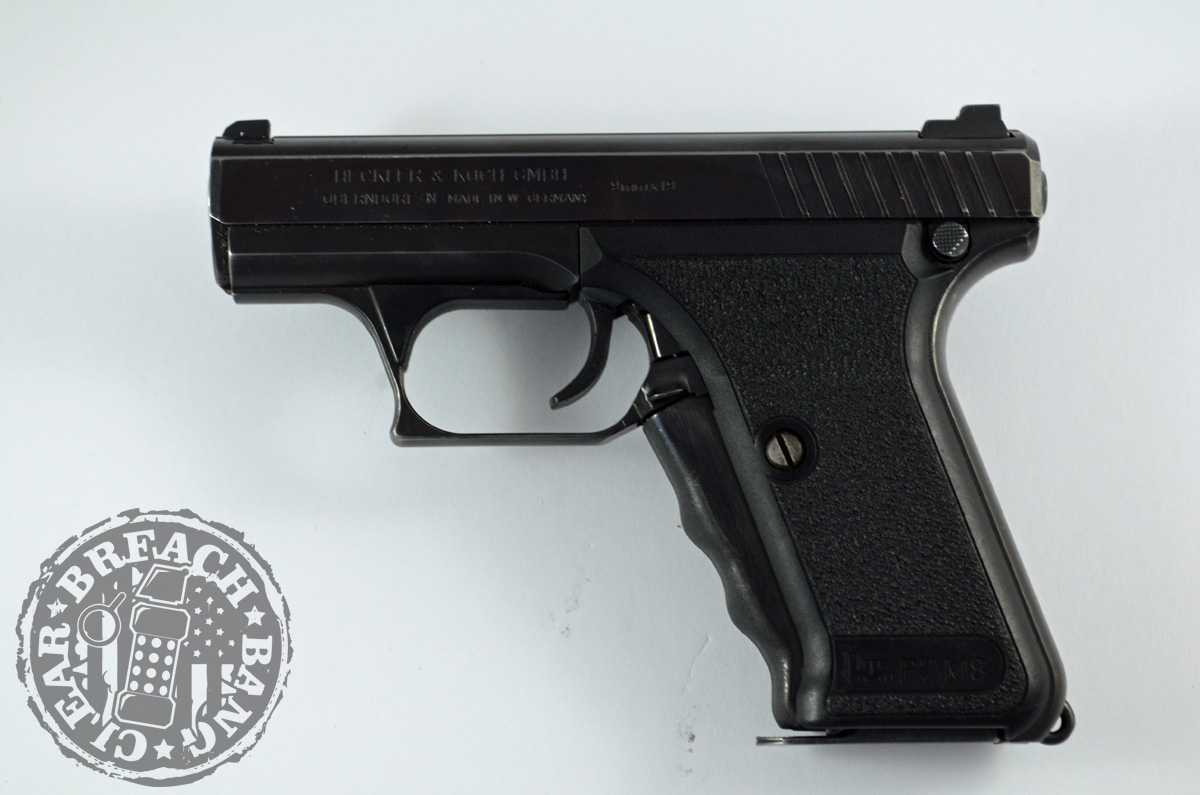
The P7M13 followed, which offered a wider frame to accommodate a 13-round magazine instead of the traditional 8 rounds. In 1991, A version in 40 S&W was offered called the P7M10. A prototype in .45 ACP was built, but never made it to the production line.
On the range the P7 is noted for its accuracy and dependability. Complaints center on the pistol heating up after a box of 50 rounds, its low ammunition capacity, heavy weight for its size, and hefty price tag. We often felt the superb accuracy outweighed all the others. This was our “hit a moving 3×5 card at 50 feet all day long” pistol.
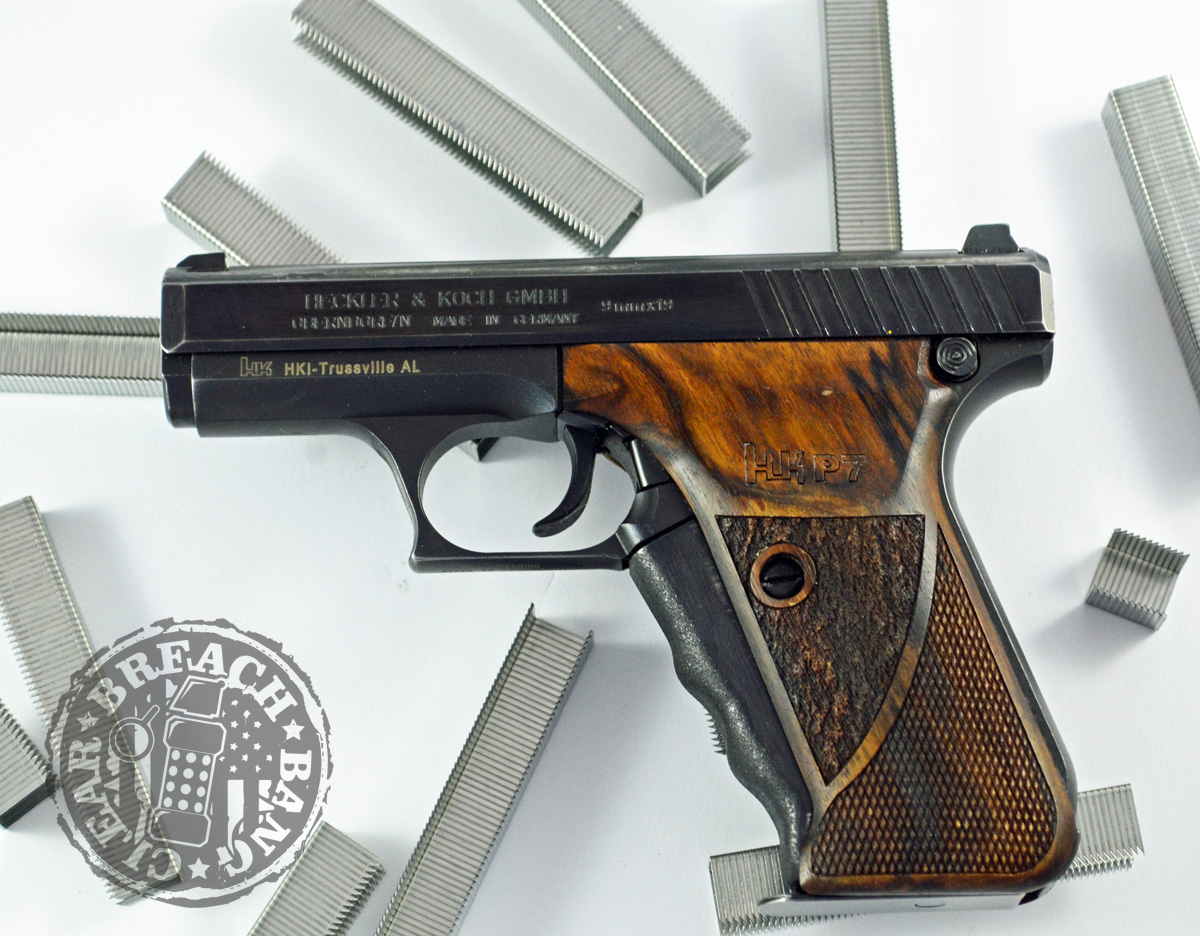
Production of these unique pistols ceased in 2008. Fans have been clamoring for HK to bring it back but alas, it will never happen because we suck and they hate us.

The P7M8 served as my primary carry gun from 2001 up until a few years ago.
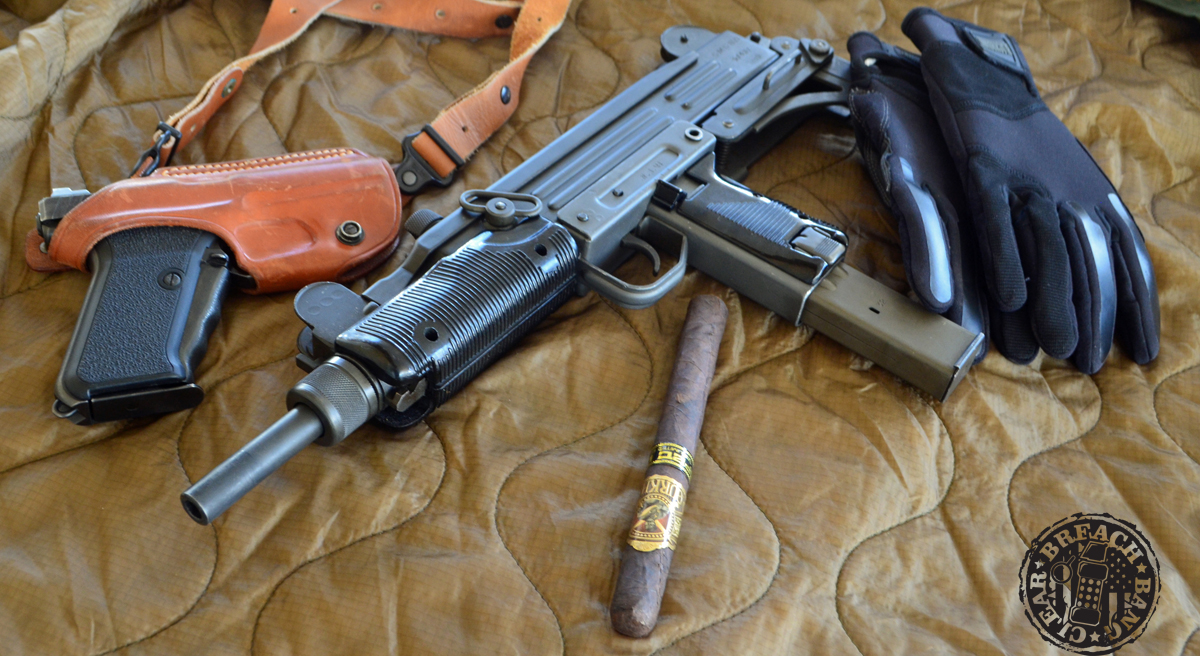
I didn’t mind the weight or reduced capacity, although the heat kept me from running any tactical courses with it. I simply dropped it from our carry rotation when I realized the price tag put it in the league of a first-generation Colt Single Action Army revolver. So there’s that.
-Mike
More Like This




One of my friends (the late John Noveske) LOVED the P7 and I used to always give him shit about it. I’ve had the (un)pleasant experience of duty carrying a P2000 LEM for way too many years. I told Johnny and Bill Geissle that I’m amazed at how crummy some HK pistols feel. The P2000 LEM has a trigger pull that is 10′ long, is like 30lbs and has the positive reset of a marshmallow or wet newspaper. I was surprised when I shot the P7, which feels like a Wilson Combat Supergrade in comparison, though the staple gun grip type reminds me more of one of those hand strengthening things they sell at the gun show/stores