

The Walther PPK as a James Bond gun could do damn-near anything – or he could do damn-near anything with. In the real world, the PPK line has been a go-to pocket pistol that set concealed carry trends for a good part of the 20th century. After nearly a century of Walther PPK history, where does it fit now, with better ballistic options and higher capacity carry guns?
Born in Weimar: The PPK’s Origins
The PPK needs little introduction. But can you imagine the response at SHOT Show, back in 1931? Ok. No SHOT Show in 1931, but I bet this weird gun would have been hit in Vegas in the 1930s. It was reacting strongly against the 1911 zeitgeist and became epistemic of a new concealed carry archetype.
It is like Johann Gottfried Herder and Carl Jung and Carl Walther all sat in an Viennese cafe and cooked up a classic.
Grunts: Zeitgesis

Walther, though, was hardly an American household name then. Walther had already established itself with the PP — Polizeipistole — in 1929. It was a sound design, a double-action semi-automatic at a time when that was genuinely rare, and German police took to it quickly. But the PP was a duty gun, sized for an OWB holster. What plainclothes officers and detectives needed was something smaller — concealable, but built on the same operating principle.
The PPK, Polizeipistole Kriminalmodell, was that answer. It trimmed the PP’s frame, shortened the grip, and reduced overall length without fundamentally changing how the gun worked. The result was a pistol that fit a coat pocket without printing and could be carried all day without becoming a burden.
That combination — concealability and reliability — turned out to have appeal well beyond German police. It found its way into the hands of military officers, intelligence services, and eventually heads of heads of state (that’s a bit of foreshadowing, for you intellectuals).
The design was so effective that it required almost no fundamental revision across the decades that followed.
But the PPK’s longevity has never been straightforward — it’s a story shaped as much by politics and import law as by engineering.
The Gun That Bond Made
No firearm in history has benefited more from fictional association, and few have been more misrepresented by it — James Bond didn’t choose the PPK, he was assigned it, and the scene where M forces the swap from a Beretta is one of the more honest moments in the franchise’s relationship with guns.
In the 1962 film adaptation, Dr. No introduced Sean Connery’s Bond, and with him the PPK — but the association didn’t begin on screen. Ian Fleming had armed Bond with a Beretta 418 (or some kind of .25 ACP Beretta. Geeks like me point to the 418). This is an a choice, and one that drew criticism from a reader named Geoffrey Boothroyd, a firearms enthusiast who wrote to Fleming directly to argue that a secret agent of Bond’s caliber deserved a more serious sidearm.
Bond sat down. He just stopped himself gazing rudely at the ceiling. Instead he looked impassively across at M.
“Well, Armourer, what do you recommend?”
Major Boothroyd put on the expert’s voice. “As a matter of fact, sir,” he said modestly, “I’ve just been testing most of the small automatics. Five thousand rounds each at twenty-five yards. Of all of them, I’d choose the Walther PPK 7.65 mm. It only came fourth after the Japanese M-14, the Russian Tokarev and the Sauer M-38. But I like its light trigger pull and the extension spur of the magazine gives a grip that should suit 007. It’s a real stopping gun. Of course it’s about a .32 calibre as compared with the Beretta’s .25, but I wouldn’t recommend anything lighter. And you can get ammunition for the Walther anywhere in the world. That gives it an edge on the Japanese and the Russian guns.”
M turned to Bond. “Any comments?”
“It’s a good gun, sir,” Bond admitted. “Bit more bulky than the Beretta. How does the Armourer suggest I carry it?”
Geoffrey Boothroyd suggested the Walther PPK, Fleming made the swap in Dr. No, and then immortalized the correspondent by naming the MI6 armorer Q after him — Major Boothroyd. The PPK’s most famous endorsement came not from a spy agency but from a letter-writing gun nut in Britain.
After, the PPK and Bond became synonymous in the public imagination. That did things for the gun’s mystique that no advertising budget could replicate. It also created a version of the PPK in popular culture that bore only a passing resemblance to the actual pistol — elegant, effortless, and somehow ballistically adequate for every situation Bond encountered, which no .380 ACP pocket pistol has ever been.
The reality is more interesting. The PPK earned its reputation on its own terms.
A Gun on the Wrong Side of History — and the Right One
The PPK’s historical footprint is complicated — it was the sidearm of choice for Luftwaffe officers and Gestapo agents, but it also ended up in the hands of resistance fighters, Allied operatives, and eventually became a staple of Western law enforcement.
The gun’s most historically significant moment is also its darkest. Adolf Hitler shot himself on April 30, 1945, with a Walther PPK. That fact alone guaranteed the gun a place in history books that no other pocket pistol can match.
But the PPK’s wartime record was never exclusively sinister. It was standard issue across multiple branches of the German military and police, which meant it was captured, requisitioned, and carried by Allied forces throughout the war. OSS operatives carried them. Resistance fighters loved these things. The gun was agnostic about its owner in the way that well-made tools tend to be.
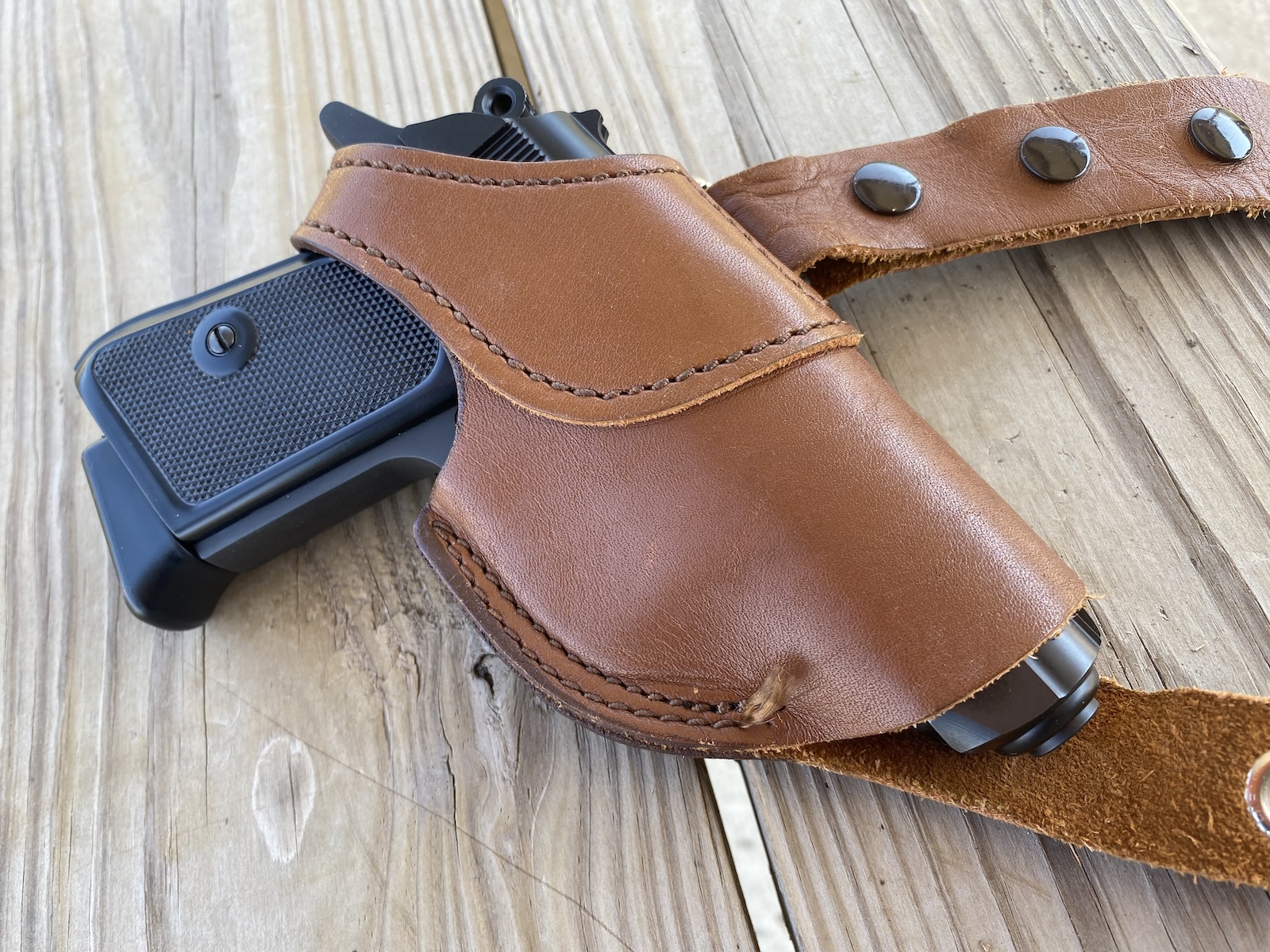
After the war, that reputation for quality and concealability made the PPK a natural fit for the intelligence and law enforcement communities that defined the Cold War era. It became a staple of European police forces, found favor with protection details and plainclothes officers across the world, and — through Bond — embedded itself in the cultural shorthand for a certain kind of discreet, professional lethality.
That complicated legacy followed the gun across the Atlantic, where American import law would reshape it in ways Walther never anticipated.
The Gun Control Act, the Sporting Purpose Test, and Why the PPK Couldn’t Come In
The Gun Control Act of 1968 didn’t ban the PPK — it just made importing it effectively impossible, introducing a point system that penalized small, concealable pistols and pushed Walther to find American solutions to an American regulatory problem.
The GCA was passed in the wake of the assassinations of Robert Kennedy and Martin Luther King Jr. The system assigned points based on size, caliber, safety features, and other criteria — with a minimum threshold required for a handgun to qualify for import.
The explicit goal was to keep cheap, small, easily concealable pistols — so-called Saturday Night Specials — out of the American market. The PPK, despite being neither cheap nor poorly made, failed the size threshold.
The irony was considerable. One of the most respected pocket pistols in the world, carried by police and intelligence services across Europe, couldn’t clear a bureaucratic point system designed to screen out junk.
Those solutions came in stages, and each one left a different mark on the gun’s identity in the American market.
Interarms, Smith & Wesson, and the American PPK
The history of the PPK in America is really a history of partnerships — Interarms brought early versions in under the PPK/S designation as a regulatory workaround, and Smith & Wesson eventually took over production entirely, moving assembly to the United States and changing the gun’s character in ways both subtle and significant.
Walther developed the PPK/S — essentially a PPK slide on a PP frame — which was large enough to clear the GCA’s point threshold and could be imported legally. It wasn’t the PPK, exactly, but it was close enough to satisfy most buyers. Interarms, a Virginia-based importing company, brought the PPK/S into the American market and for many years it was the only new Walther of that type we could legally buy new in the United States.
The arrangement worked until it didn’t. Interarms eventually lost the importing contract. Smith & Wesson entered the picture in 2002. The partnership made sense on paper — S&W had the manufacturing infrastructure, the distribution network, and the credibility. The guns that came out of that arrangement were serviceable, but they drew criticism from purists who felt the fit and finish didn’t match what European production had delivered. Was that fair?

Smith is a mass-market American production behemoth. Walther is German. I can’t say, myself.
The latest chapter in that story is being written in Fort Smith, Arkansas — my hometown.
Made in Arkansas: The Current Production PPK
The Fort Smith gun is the most American PPK ever made — assembled domestically, updated in small but meaningful ways, and positioned as the definitive version of a design that has survived long enough to outlast most of the political forces that shaped it.
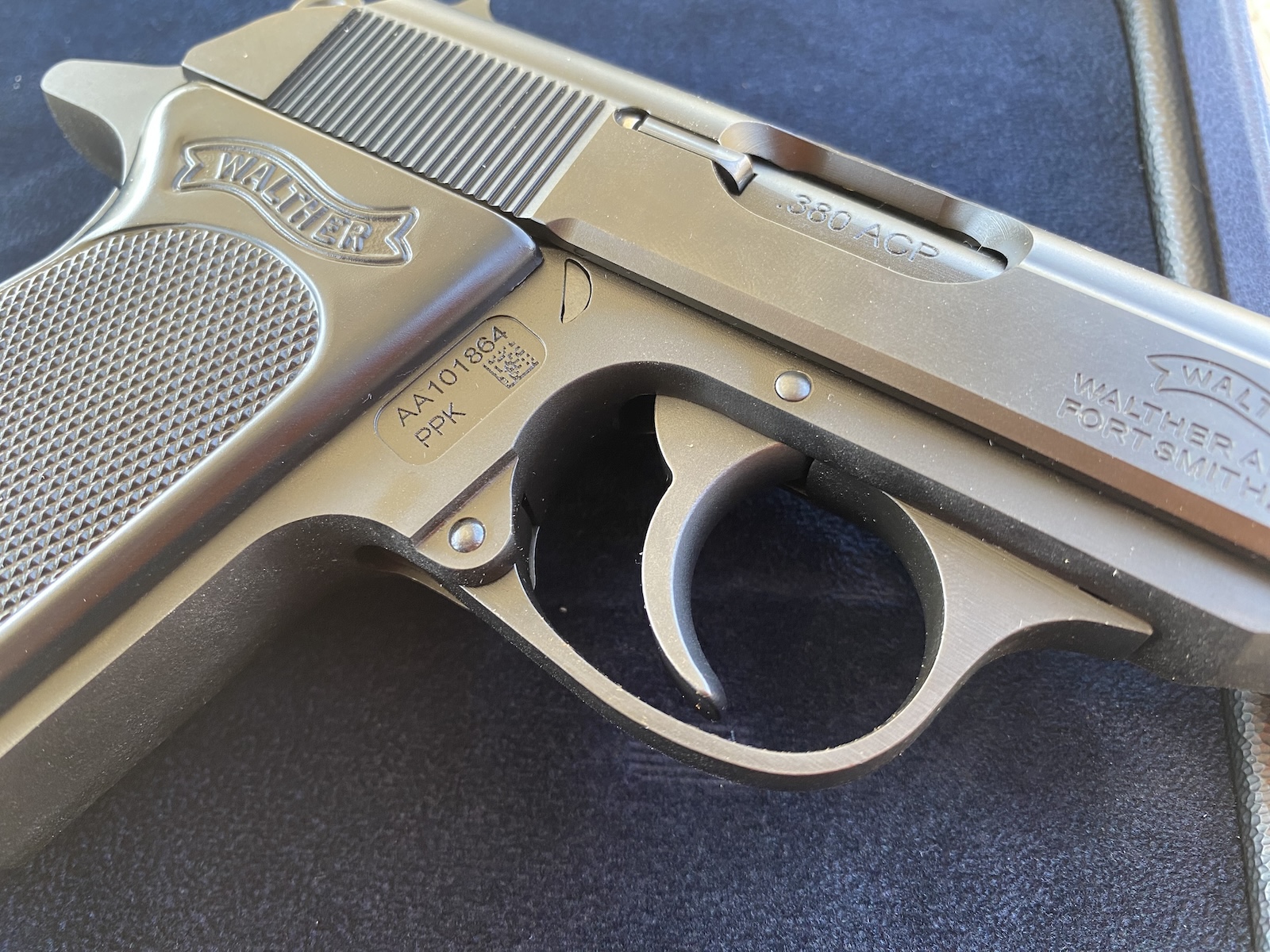
Walther’s American headquarters relocated to Fort Smith in 2012, and production of the PPK and PPK/S followed. The move brought something the S&W era hadn’t fully delivered — direct Walther oversight of the production process, which addressed many of the quality consistency complaints that had followed the American-made guns.
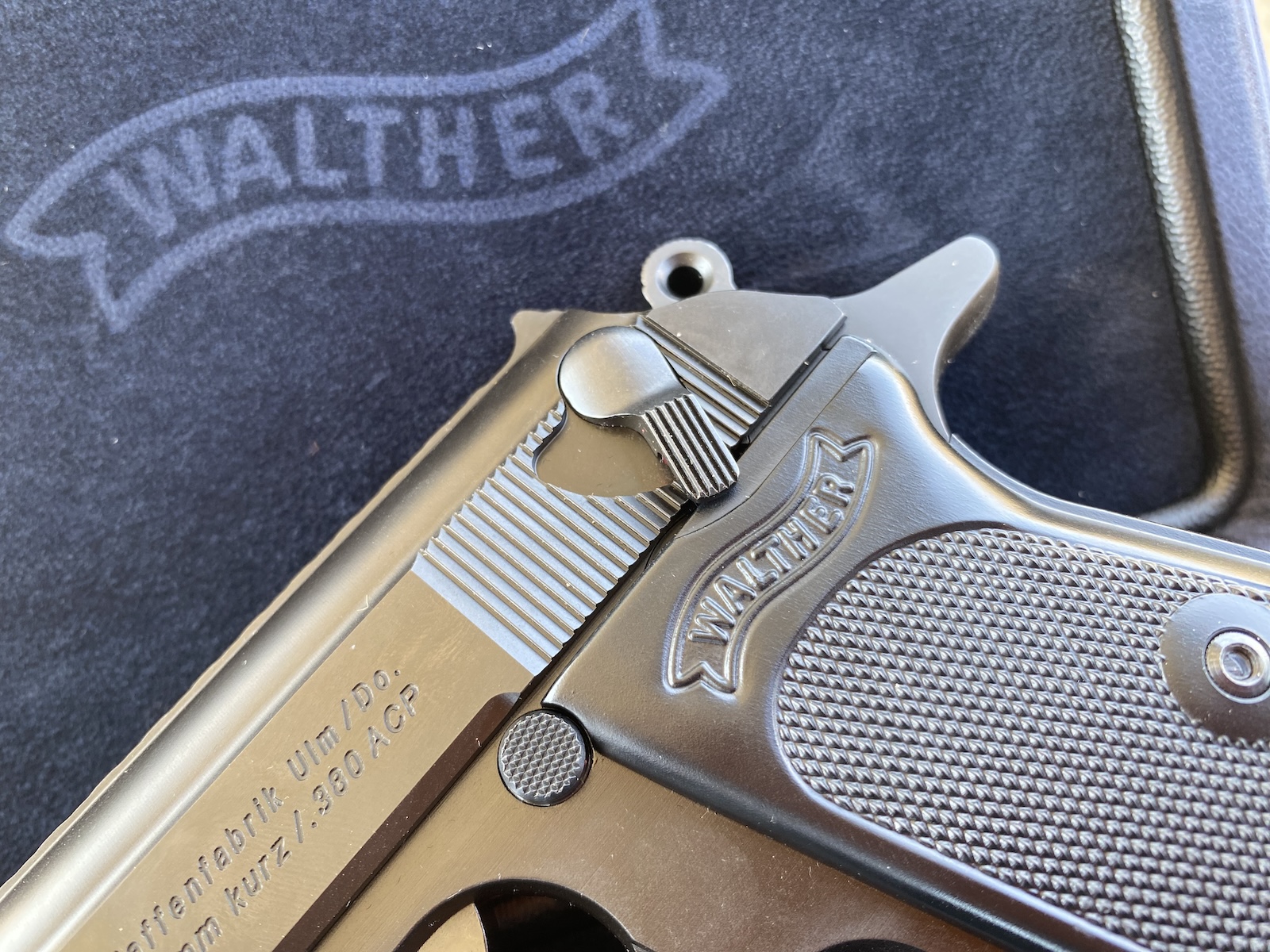
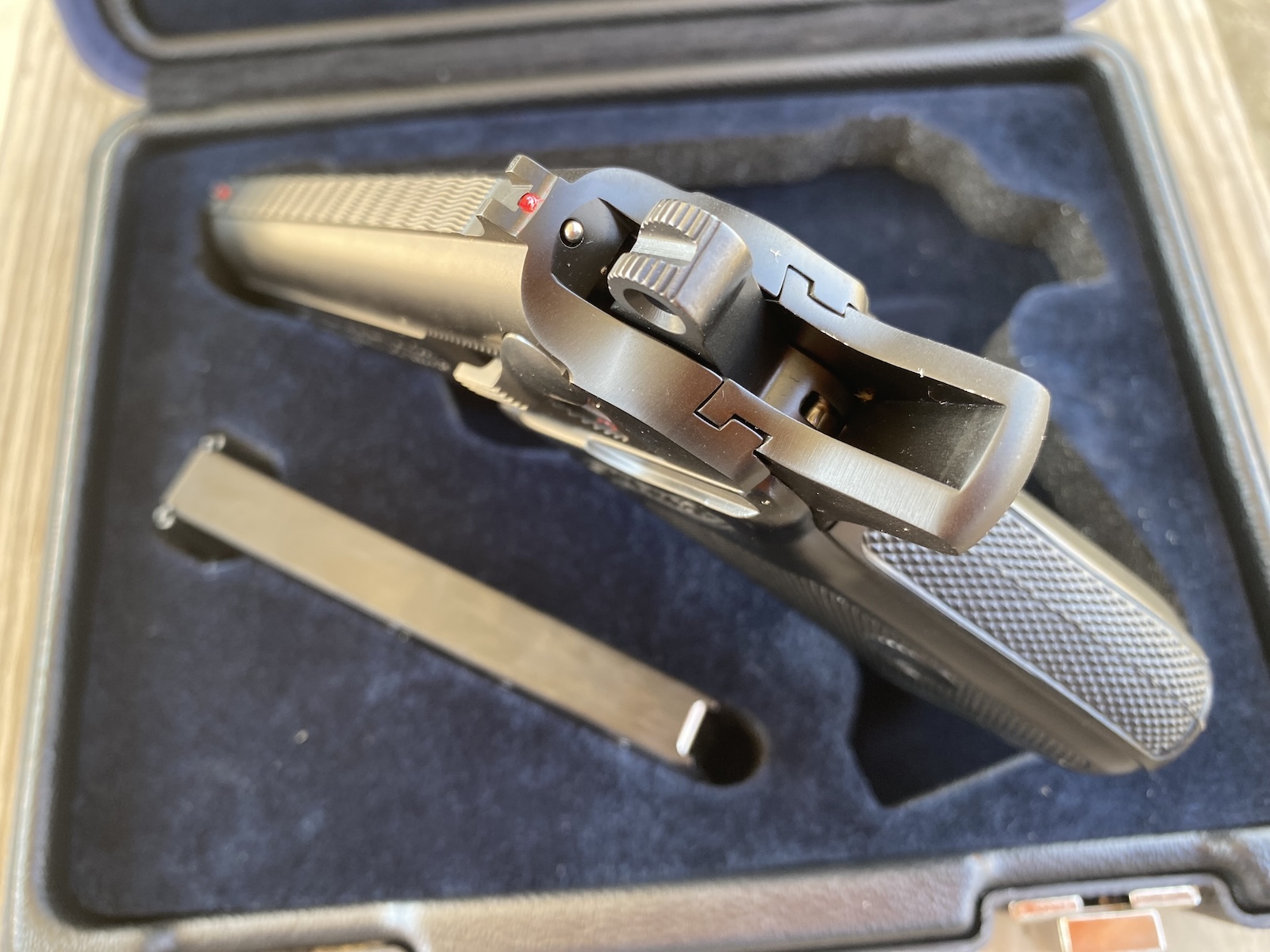
The Fort Smith PPK is still recognizably the same gun that came out of Zella-Mehlis in 1931, but Fort Smith models have refinements like an extended beavertail derived from S&W’s influence.
One major change is the new internal extractor which addresses one of the gun’s persistent reliability complaints. And finish quality has drawn favorable comparisons to German production in a way that S&W-era guns rarely did.
Specs and Variants
The PPK’s dimensions have remained remarkably stable across nine decades of production, which is either a testament to the original design or an acknowledgment that some things don’t need fixing.
The model specs for this black version are standard PPK.
Caliber: .380 ACP
Slide Color: Black
Loaded Chamber Indicator: Yes
Frame Material: Steel
Trigger: SA/DA
Magazines Included: 2
Capacity: 6 Round
Length: 6.1 (Inch)
Width: 1 (Inch)
Height: 4.3 (Inches)
Weight: 19 (Ounces)
The distinction between the PPK and PPK/S is worth understanding clearly, because it gets muddled regularly. The PPK/S pairs a PPK slide with the slightly longer PP frame, adding just enough size to the grip to clear the import point threshold while preserving the PPK’s slide and barrel dimensions.
Its larger grip holds one additional round, and is somewhat easier to shoot due to the increased frame length reducing felt recoil. A PPK is more concealable. A PPK/S is marginally more shootable.
A PPK is typically 6+1 (.380), PPK/S is 7+1.
Caliber Options and Why .380 Became the Standard
PPKs have been chambered in .22 LR, .25 ACP, .32 ACP, and .380 ACP. The .32 ACP was the original chambering and remained dominant in European markets for decades — it was considered adequate for police work at the time.
American assumptions about minimally effective calibers pushed demand toward .380 ACP. Current Fort Smith guns are available in .380 ACP and .22 LR, the latter primarily as a training and range option. For most buyers, .380 is the answer — it’s the chambering the gun was refined around for the American market. If we Americans could order 10mm versions, we would.
Shooting the PPK
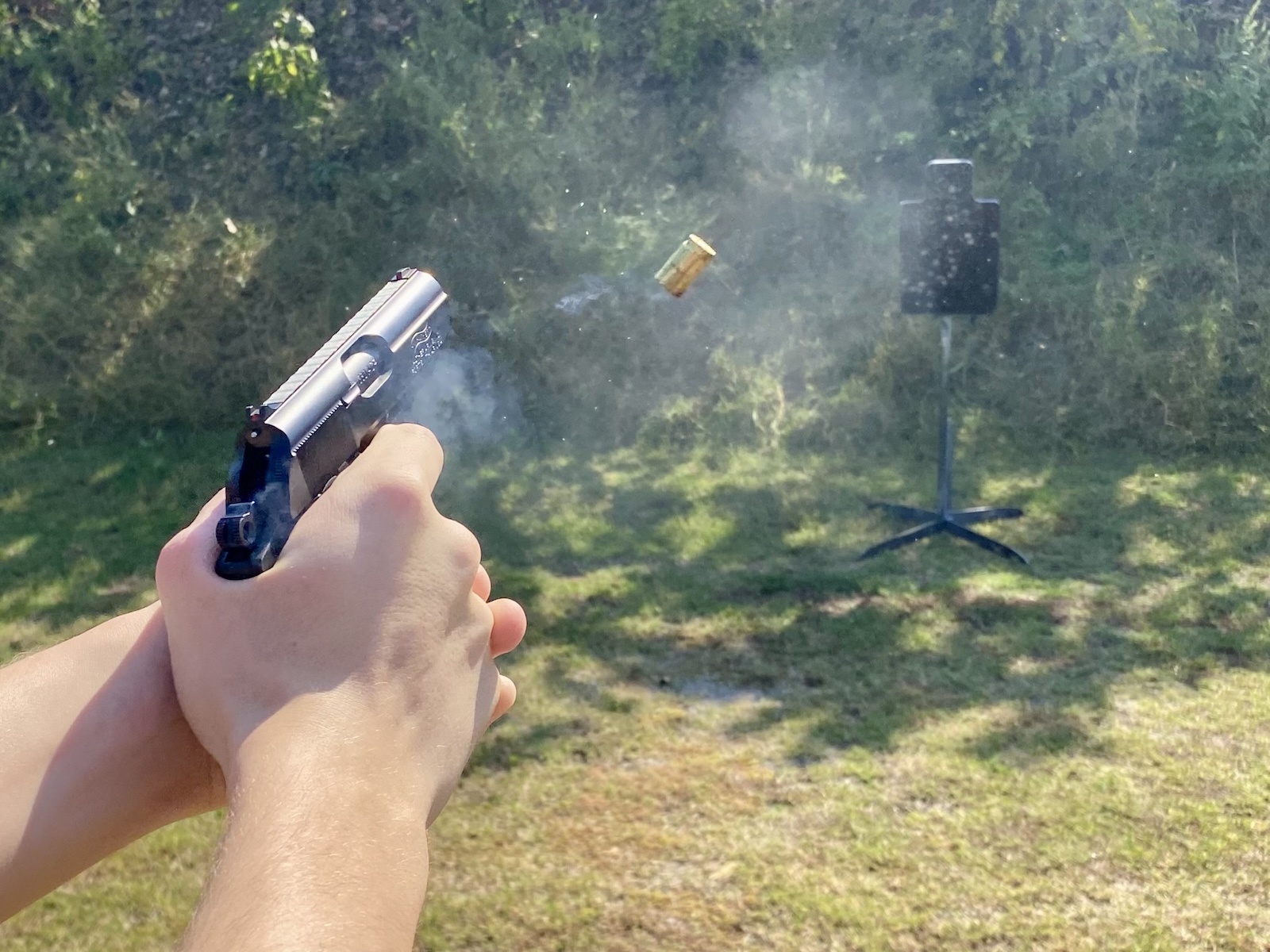
I can’t make this simple enough. .380 is easy on the hands in all but the smallest of mouse-guns. Pack it in steel, like a PPK, and it is very easy to control. Recoil is light. Muzzle flip is minimal for a gun this size.
But it is a pocket-pistol. This isn’t a long-range accuracy gun. You’re not going to run up a huge round count. Walther’s masterpiece is a gun meant to be carried. Shooting it seems like a last-resort kind of option.
If you must shoot it, and I’d expect you would, Tula is your best friend.
If you’d rather run American ammo in your American-made German gun, Federal has you covered (with the able assistance of Ammunition to Go).
If you are going to carry this, or any other .380, I’m going to suggest Black Hills’ Honey Badger. Solid copper, deeper penetration, and readily available at a perfectly reasonable price.
Far from final thoughts
Late in 2025, Walther announced a pause in PPK/PPK/S production. Their explanation points to a vague modernization. This may make new production PPK guns harder to find, for a bit, or drive up their prices. It wouldn’t surprise me if what follows incorporates some material changes, or even another caliber upgrade (I want my 9mm PPK, dammit).
Until then…



0 Comments