

Atavism: a noun. According to Oxford Languages, atavism describes a tendency to revert to something ancient or ancestral. More generally, this applies to biology, where organisms retain redundant features during evolution. Below you’ll see what it has to do with muzzleloader kits, black powder, and the atavistic satisfaciton of building something by hand.
In the world of firearms ownership, atavism is best seen through the shooting experience of our dead so that we might live more greatly. It could be as simple as holding onto granddad’s rifle and taking it out to the range or the occasional special hunt. That rifle might not be the latest or greatest, but there is a certain connection that is felt through its continued use and its continued ability to do the work.
In effect, using grandpa’s gun means seeing the world as he did, enduring as he did, and succeeding as he did.
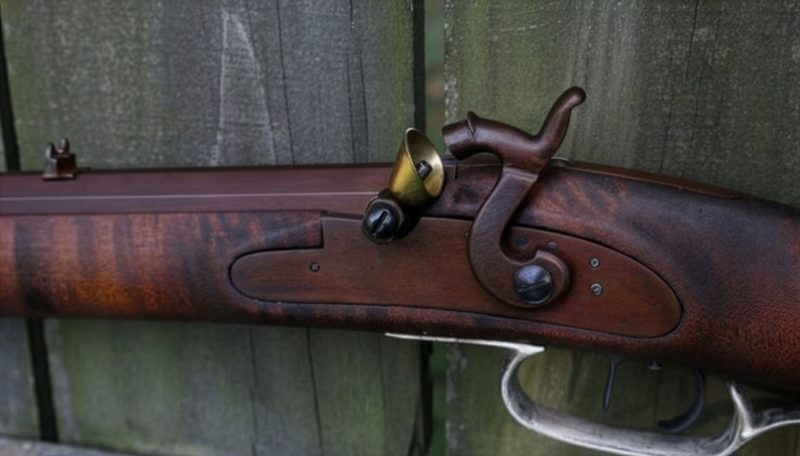
Muzzleloader Hunting
Combine atavism, gun ownership, and a knack for history, and you end up with countless people collecting, using, and even re-creating entire classes of firearms. Case in point is the muzzleloader hunter and shooter who endures the hassles of a single shot and a timely, methodical reload. Some appreciate the old ways enough to dress up in period 18th- and 19th-century gear and build their own muzzleloading rifles to the period, while others simply don their range or camo clothes and get to work.
It was just these atavistic types who pushed for and succeeded in getting primitive weapon seasons throughout the United States and the world, going where the modern cartridge rifle and bow had traditionally prevailed. Despite their drawbacks, muzzleloaders have their adherents, and for several good reasons.
- You get to try something different.
- You get to take advantage of special seasons to harvest more meat.
- You can tailor the powder charge on the fly to the shooter’s ability to handle the recoil and the targets and game you intend to put holes in.
What you don’t have to (though you certainly can) is dress in buckskin and read period accounts to enjoy one (or build it yourself). Plenty of that translates to how modern rifles should perform and fit you, the shooter, once you understand the muzzleloader.
Finding Your Why: Singling Out the Muzzleloader You Want
If you want to channel your ancestry, live a specific local or regional brand of history, or just get a taste of that experience while reaping the benefits, there is a muzzleloader for you. But be warned, if you adopt the front stuffer as a hobby, don’t be surprised if you start one way and end up another.
I started muzzleloading with a kit build (my first) that I scratched up using grass-cutting cash. It was something different than the typical deer rifle, and I’d seen them in some period films, so I wanted to build one.
Nowadays I like to sample different eras, although my ancestry makes me partial to French trade guns. No matter what muzzleloader you choose, part of it is up to taste, but utility should never be forgotten.

Although matchlock and wheellock guns are still being made, most traditional muzzleloading setups are going to revolve around flintlock or percussion (caplock) guns. While each type and each style in that type fits certain historical niches, you have to bet on what you will get the most mileage out of when shooting.
Flintlocks are a bit more challenging to shoot and have more quirks to be mastered. I personally started off with a caplock because it was a bit less expensive to get into, but in 2024, there is a shortage of caps, and the case for the flintlock and its simplicity becomes clearer. You also have to check your local laws if you intend to hunt. While both are legal in most places, states like Pennsylvania have specific flintlock-only seasons where even the older matchlock isn’t allowed.
You also have to decide on whether you want a smoothbore or a rifle, and if you pick a rifle, what caliber. If your shots are closer than 75 yards and you might have to shoot either large or small game, a versatile smoothbore with ball or shot is a good choice. Rifles are more accurate and have a greater range.
Most traditional muzzleloading is done with round lead ball ammunition, and the bigger the better, caliber-wise. Rifles in.32-.36 caliber are ideal for small game but are light if you want to chase whitetail. The most common muzzleloader kit options are in .45 and .50 caliber, but these too can be a little light if you are going after bigger game like elk or bear.
Another factor complicating the mix is that there is no shortage of muzzleloaders with fast-twist barrels that accurately shoot modern conical and sabot-jacketed bullets, which makes bore size less relevant. All of this is hemmed in by your local laws and your own personal tastes.
Muzzleloading Build Options
Just like when buying a completed rifle, the work and tools needed to build a muzzleloader can be as inexpensive and thrifty as you want, or as complex and rewarding. Consider three tiers of build options.

1. The Factory Kit.
These kits are made relatively close to completion, with a machine-inletted unfinished stock and parts that require very minor hand-fitting to assemble. The major operations come down to sanding the stock and final finishing of the barrel. Traditions, CVA, and Investarms produce kits like these, usually patterned loosely after a Kentucky or Hawken-style plains rifle in a few different calibers.
My first muzzleloader was built from a Traditions kit and took little more than sandpaper, walnut stain, and cold blue to finish. That .50 caliber Hawken is still with me, and it’s been on quite a few hunting trips, although it does not look exactly like a true Hawken. The criticism with guns like these is that, while they fit the historical theme, their appearance lacks refinement.
The flintlock versions also do not have the best lock geometry for the fastest ignition, although that can be fixed in the shop. Pedersoli makes kit guns that are a bit more true to historical designs, but the asking price is higher.

2. The Builder’s Kit.
The second option is a builder’s kit. An experienced muzzleloading outfit pieces this together, duplicating stocks from originals with machine tools and pairing barrels and furniture to match documented originals. Jim Chambers, Track of the Wolf, and Kibler’s Longrifles are just a few, and I’ll wager they are the best in this category.
You can get authentic-to-the-period in appearance, with more slender stocks and proportional barrels that fit the period, with locks that are set up out of the gate for best reliability. The cost comes with increased involvement in the build. While the major operations like installing the barrel and drilling the ramrod hole and lock mortise are mostly done, you will need a few good chisels, files, and a drill to cleanly inlet all the parts and further slim the stock.
These higher-quality components also cost more. Kits from Jim Chambers and Track require some fitting. Kibler kits are a relatively new option taking advantage of CNC equipment, and most parts snap together perfectly. Minor assembly and final finishing are required.
3. The Scratch Build.
The third option is a scratch build. A scratch build can be as simple as making your own stock and installing ready-made parts like you would find on a builder’s kit. Alternatively, you can make every single part. That would take a full shop.
A good middle ground is to purchase a good lock and barrel and make much of the rest. If you are handy with hand tools and have a few power tools lying around. This is achievable and close to the price of a factory kit with the same components you might find in a builder’s kit.
You also get the benefit of tailoring every aspect of the build up to and including fitting the stock completely to the shooter. Additionally, you’ll have the power to create or freely recreate designs that, because they’re rare in history or even unheard of, would not be sufficiently popular for someone to market as a kit.
Resources for Inspiration

The realm of scratch builds and builder’s kits also opens Pandora’s box for research on originals, where you can find artistic and functional inspiration. It can be as simple as visiting your local or regional museums, prowling artisan shows, or flipping through the many books or journals dedicated to original long arms.
Colonial Longrifles of America by Dr. George Shumway is perhaps the ultimate guide to pre-1800 rifled arms.
If your interests go a bit later, James Johnston’s Kentucky Rifles & Pistols 1750-1850 is a good, cost-effective resource.
Flintlock Fowlers: The First Guns Made in America features beautiful color photos of original smoothbores from the Pilgrim era through the 19th century.
Likewise, there are books and periodicals on specific kinds of rifles from Virginia, Western Pennsylvania, and Ohio, as well as mechanical differences like Nicholas Chadler’s Early American Underhammer Firearms.
By far the best resource I have found if you want to learn how to create a long rifle (or pistol) from scratch, including the making of jigs and specialty carving tools, Recreating the American Longrifle by Shumway and Buehle, is the resource to get.
Black Powder Build Tools: The Bare Minimum

If you find that a factory kit will suit your needs and experience, the tools needed for assembly are everyday in nature. A muzzleloader kit will not typically include tools. Take note!
A good hand rasp, a bastard file, and a triangular file, along with a quality screwdriver set, along with a sharp bench chisel will usually suffice.
If you want a builder’s kit or a scratch build, the tool list is a little longer. That list starts with a good set of metal files and at least one wood rasp. A hacksaw and a propane torch are also minimum equipment, as is a set of chisels and gouges, particularly on the smaller side for more detailed carving.
A small set of needle files for fine metal work is not strictly required, but come in handy. Those kinds of operations will require drilling and tapping steel at some point, so a good drill and at least one tap/drill set to match the screws you intend to use. A drill bit set ranging from 1/16 to 1/4 inches will serve you for drilling pins to drilling clearance holes for bolts. A set of countersinks and a jeweler’s saw pays dividends but isn’t strictly required.
Both types of projects will require a strong bench vise and a few C-clamps. Scratch builders will also need a long boring drill for drilling ramrod holes. Some shops offer custom 48-inch drills that will cover just about any rifle style, but long spade bits and concrete cutting bits will suffice. Last but not least, no kit build can be completed without a well-fit screwdriver.
A handsaw is a bare minimum requirement for scratch work, with a circular saw being better. A bandsaw capable of sawing 3-inch-thick blanks would be the ultimate in shoulder-saving.
In Summary
Muzzleloaders have often been portrayed as cantankerous and overinvolved, but if they were, our ancestors wouldn’t have made them. While there are more tools in the tool bag to maintain them and shoot them, you don’t need a tackle box of gear to set one off and enjoy it. You also don’t need a full shop to build one.
Whether you are taking your first and last steps with a single Hawken factory muzzleloader kit just to get a taste, or looking to create something unseen, you need very little to get started. The best part is that information on shooting and building muzzleloaders is more widely available than ever, so you can avoid mistakes many of us learned the hard way.
In our next installment, follow along for building insights as we construct an Ohio plains rifle and a few other muzzleloaders.




0 Comments