
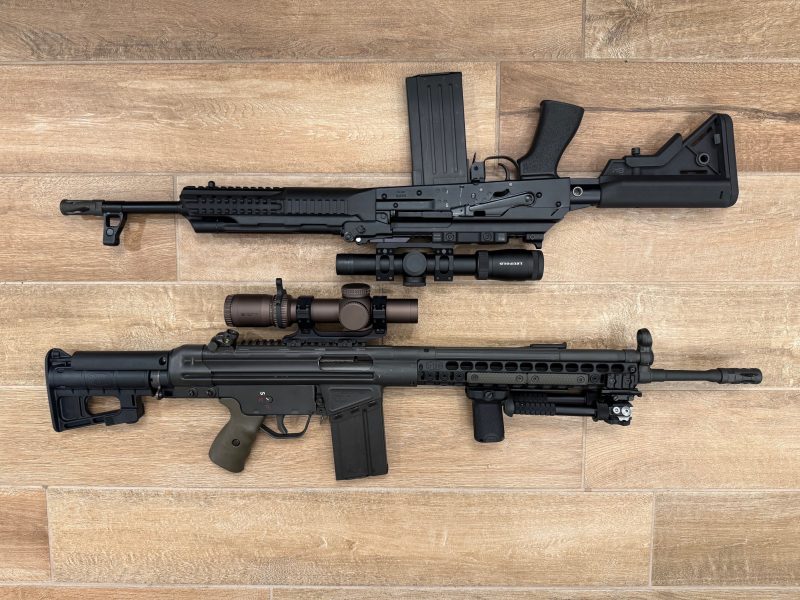
Designated Marksman Rifle? Main Battle Rifle? Designated Main Marksman Battle Rifle Rifle? Whatever you want to call it, CZVZ Doug is using this article to talk about a different take on both (and each) of those, all rolled up in one sexy thicc heavy-caliber honey. Take a read. Mad Duo
Designated Marksman Rifle – Main Battle Rifle
Maybe MBR2DMRS?
After 20 years of arguing on the internet, I think we have all reached the exhausted conclusion that when the SHTF, the vast majority of us are just grabbing our AR. Sixty years of experimentation in both the platform and optics have given us a buffet of builds to fill almost any role, and frankly, the old AR does everything really well.
I still love my AK, which can be readily modernized and cheaply bought thanks to new American production finally getting it right. However, the recent wars between Oceania and Eurasia (or is it Eastasia?) have dried up dirt-cheap commie rounds, making the associated platforms slightly less appealing. So, what if you have your “go-to” AR all set and want another do-it-all gun with more range, more power, and more barrier-defeating capability, etc.?
Enter the Designated Marksman Rifle (DMR)/Main Battle Rifle (MBR) hybrid concept, a heavy hitter with a wide breadth of usability.
Hopefully.
Not Breaking the Bank
I didn’t want this to come with an insane price tag, so the trick to staying on budget is to start with an inexpensive donor gun or one that needs very little added to get the ergos and capability we want. Because of this, the SCAR 17 and 20 are out, especially given the recent announcement that the 17s are being discontinued. They start expensive and need a fair amount of aftermarket support for a relatively modern design.
I would consider the Molot Vepr in 7.62×51 for this task, as it is compact, accurate, and sold new for $800, at least back when people didn’t realize we wouldn’t be getting true Russian-made guns forever. With another $800 in work and parts from a competent gunsmith to make it 922r-compliant, you have something unmatched anywhere for $1,600.
Sadly, the base gun now routinely sells for $3,000- $ 6,000. Sounds like it’s time to roll the dice on a PTR-91 and see if we get a lemon or a “just as good as a G3” copy.
The Inspiration
There are a few YouTube channels that inevitably make me spend money. 9-Hole Reviews is one of those. They did a two-part series on “Modernizing the G3” by essentially building a Swedish AK4D. In this, they used the terms “Marksman” and “Assaulter” for the dual role the gun is theoretically capable of. While this works great and describes the role of the person wielding the gun, I like to use the term often applied to the gun itself. It has become commonplace in the gun world to throw around terms like “SPR”, “GPR”, “CQB”, “DMR”, “MBR”, “PDW” and others so I’ll adopt the same parlance.
The Platform
I had a PTR-91 GIR (the version with a built-in top rail) sitting around that always impressed me with its accuracy performance on even the cheapest regular 147gr ball ammo. Just a few years ago these sold for $950 but appear to go for around $1,200+ these days, such is the way of the world. It’s still remarkably affordable for a reliable and accurate 308 gun that also exudes old-school cool. Magazines for HK-91s used to be practically free, but even still the aluminum ones can be found used in Very Good condition for less than $10. The steel, being the preferred choice, costs a bit more. Even at $20, they are 1/3 of the cost of SCAR 17 magazines. The 18″-barrel length is my preferred for a 308 gun I plan to run unsuppressed. Compact enough but with a fraction of the fireball I find many 16″ barrels throw out from unburnt powder.
Let me throw in a real quick aside here. As a writer, I get to define my terms but in this instance, when I refer to a “Main Battle Rifle,” my interpretation is basically the same as what the rest of the world calls it. This is a self-loading military rifle that fires a full-power cartridge, like the 7.62x51mm NATO, and is capable of semi-automatic or select-fire operation. This is in contrast to an Assault Rifle, which uses a smaller, intermediate cartridge, like the 5.56x45mm. Key characteristics include their longer range and heavier recoil compared to assault rifles.
…
Second, when I say a “Designated Marksman Rifle,” I again mean what the rest of the world generally agrees is a semi-automatic rifle that bridges the gap between a standard infantry assault rifle and a sniper rifle. It is designed for infantry soldiers who need to engage targets with greater accuracy at longer ranges than a standard rifle allows, but also require the semi-automatic speed for follow-up shots and the ability to stay with their rifle squad.
The Build
If you are going for the AK4D, look for the Spuhr brand; it is the only answer. It’s a fair bit more expensive than some options from Midwest Industries, which would work great as well. The quality is on par with the price, and with an inexpensive base gun, I felt like splurging. The stock makes a huge difference. If you only do one thing to the weapon, this is it.
Not only does it give you a much better choice of Length of Pull, but it also puts the gun more in line with your body when firing. Note, you’re pretty much done using the iron sights ever again because of the new, higher cheek rest, but it’s perfect for optics. Heck, the Swedes often cut the whole front sight off because, as I’ll talk about below, it can appear in your optic window.
Reddit, as always, knows.
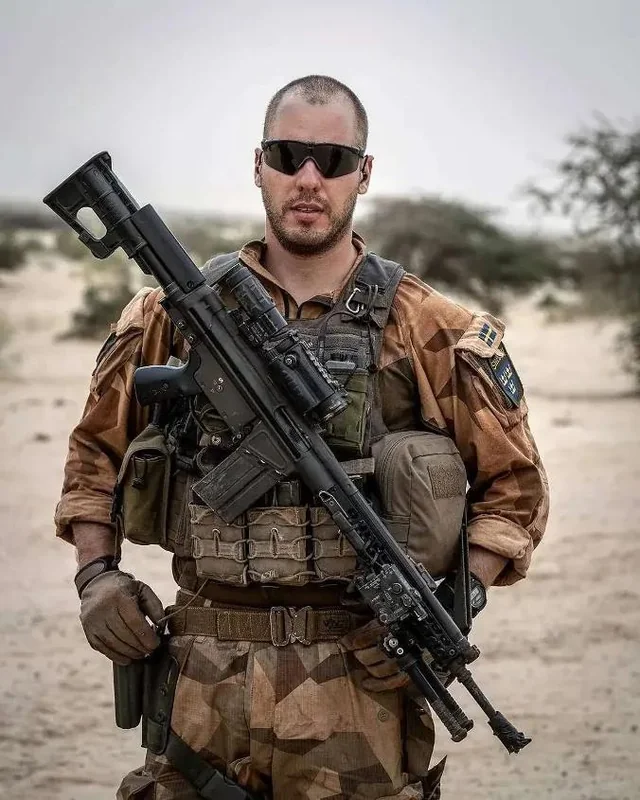
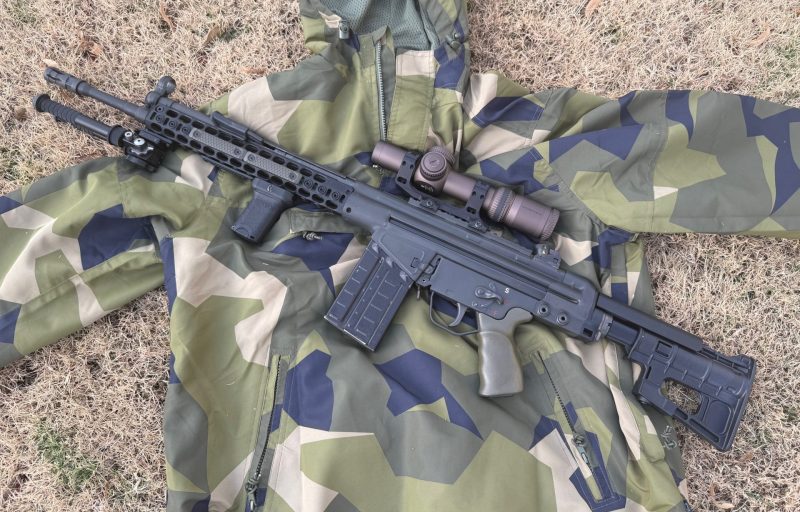
As far as handguards go you won’t find a cooler look. With this look comes a proprietary mounting system, and even short Picatinny rails will cost you an eye-watering $80. Good thing we saved on magazines! Coincidentally, as I learned in the 9-hole video, the Slate Black Industries 2-slot grip panels align with the proprietary holes even if I did have to get European metric screws to attach them. The subtle OD green accents are hot though and reminiscent of the coloring of the original surplus parts on the gun.
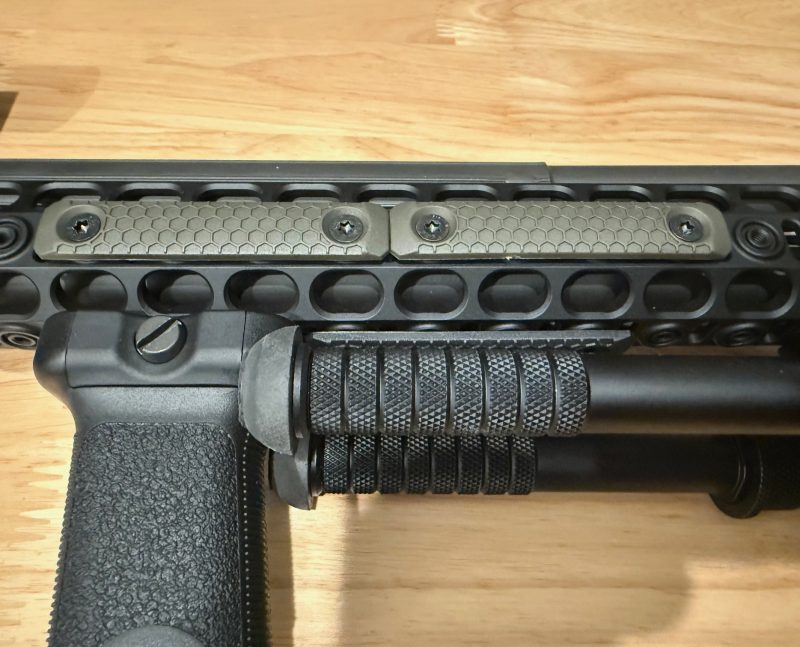
Next comes the bipod and VFG. Here I went with an Atlas bipod, which gives me the option to lock the legs forward, out of the way of the VFG, or tucked back, streamlining things just the way Buffalo Bill would approve. I’m a fan of the Atlas’s articulation and the ability to lock the legs at an angle. The only thing it is missing is quick deployment similar to the Harris, but I prioritize the other features over a little more speed. For the VFG, I went with a tried-and-true BCM shorty mounted to another oh-so-expensive Spuhr picatinny rail section.
Lastly, I had two mods I didn’t care for, one I kept and the other I removed. The first was a grippier pistol grip I messed around with replacing, but it didn’t do anything for me. Thanks to the lower receiver running a metal frame through the grip, there is no hope of changing the hopelessly dated grip angle. I dig the originally equipped surplus green look, too.
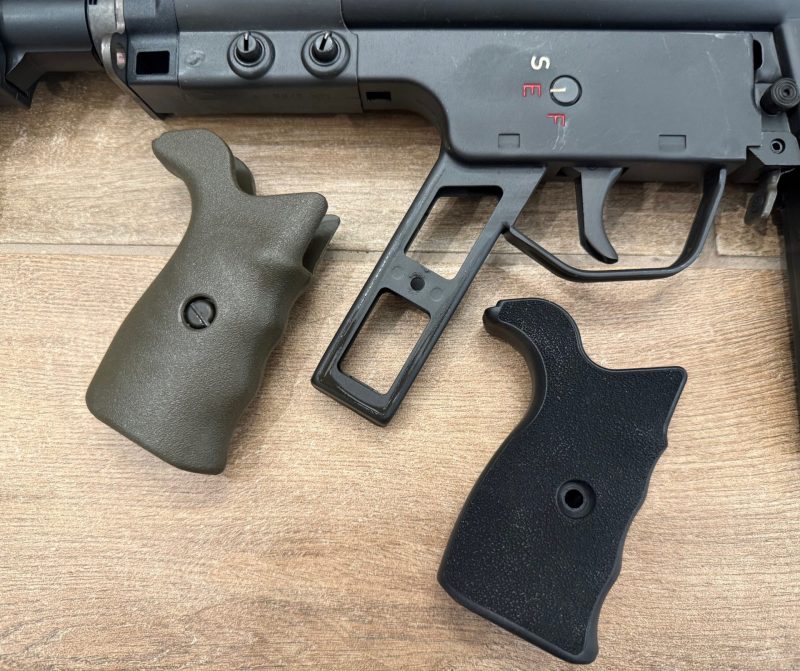
The second was the extended charging handle, which isn’t very complicated to install but a bit of a pain lining back up the tension spring. Anyone who has ever launched a detent during an AR build can relate to this “easy to understand, difficult to master” type of operation. Unfortunately, after all the spring-related fuss, it seems that instead of giving me more leverage, it actually causes me to apply pressure in a perpendicular manner rather than in line with the gun, which makes charging it nearly impossible until I refocus my pull. I’m not putting myself back through the install to reverse it, though.
Optics Maketh the Role
The more I play with optics, the more I realize that they, as much as the gun they sit on, drive the role of the weapon. To fill both a DMR role where I need to be able to shoot accurately at distance, as well as a gun I can easily shoot fast at 15 yards, asks a lot from a single optic.
Go ahead and take your Adderall now because I’m about to get long-winded on my mount choice and philosophy.
I’ll be doing a standalone article on the Vortex Razor HD Gen III, but here’s why I chose it for this build.
To start, an LPVO was the only choice. If you want a true 1x and the ability to go up to over 6x or more for the long-distance work, you need this. Red dots with a flip mount won’t get you there. 1-10x in a relatively compact package is a range unthinkable to many of us just 10 years ago, and especially at a price that won’t lead to a divorce.
That brings us to number 2: the Vortex can be had for well below even a reasonable starting MSRP.
Go ahead and take your Adderall now because I’m about to get long-winded on my mount choice and philosophy. The difference between 1.54 and 1.93 inches seems minuscule, but something strange happens when you apply that to optic heights. Too low, and you’re hunched over the rifle when shooting standing; too high, and you’ll be straining to get a chin weld when shooting prone. The solution may be to put a 12 o’clock red dot on top of a 1.54, and the mount I bought offers that as an option. However, I’m trying to keep cost and complexity down as much as possible, so I chose the 1.70-inch mount.
The 1.70 is a Goldilocks zone height on this gun for three reasons.
- First, the new Spuhr stock height is considerably higher than the standard G3 stock. It actually makes the iron sights essentially unusable as mentioned. What you end up with is an AR-15-like stock-to-rail height that gives predictable results with the heights you are used to. I’m a 1.93″ guy on AR’s now for the record. With a 1.70″ optic, I can shoot comfortably standing up in the MBR role and still get behind the optic in the prone for DMR work without that before-mentioned chin weld. TBD if this is too high to put a red dot on top later, but this Replitia mount allows side-offset mounting. For the record, Badger Ordinance is a great mount, and I considered it, but the enormous bolts hanging off the side are a death sentence for your knuckles on an HK charging handle gun.
- Second is the front sight post on the G3. In Sweden, they often cut this off. Not being willing to do this permanent modification, I found the 1.70 put it down in the lower 1/4 of my window on 1x, and anything over 3x you don’t see it at all. If you use backup irons on your AR, this minor intrusion into your optics picture is a non-factor.
- Third is clearing the rear iron sight. Again, this is removable, but I like the safety blanket of irons, even with a quality optic that is unlikely ever to go down. The 30mm and 34mm scopes I tested on a 1.54 mount both cleared the sight, but there was barely any daylight. It was tight enough that I couldn’t be sure all LPVOs would, especially if they have a thicker magnification adjustment ring. The 1.70 gives a more comfortable amount of clearance.
I’ve made much ado about less than 1/2 an inch, but in this application, it makes a big difference. Yes, you can get away with any height, but a little bit of testing things out will result in what is most comfortable for you. That’s why I say a “big” difference.
A small amount of additional comfort spread over hours and days of use results in a big reduction in fatigue. When I was younger, I didn’t waste time optimizing comfort, whether that be ruck pack straps or scope height, because I would just use the brute force power of youth to get through. Now I’m fully onboard with the “ounces equal pounds, and pounds equal pain” train of thought, applied to everything.
Heavy Boi
Speaking of “pounds”, this gal is THICC.
So, let’s address this downside now.
There’s always the one guy on every internet forum who, when you mention something is heavy, chimes in with, “Maybe you should lift weights.” That’s a great idea, genius.
Oh, wait.
These guys have never humped (translation: carried on a long-dismounted patrol or ruck march along with your other gear) anything. Ever. This G3/AK4D/PTR-91 build weighs in at 13lbs empty and 14.5lbs with a loaded magazine. Spend 8 hours (or 8 days) with this instead of a 7-lb-loaded AR, and tell me it doesn’t make a difference.
These are usually the Billy Badasses that show up to a 2-day class wearing body armor and looking down condescendingly on everyone else until about lunchtime, when the plates go quietly back into the car.
So you have to ask yourself, is the capability I get for twice the weight worth it? The same can be said for that body armor. Unless I am manning a static defense point, I’m not sure I want to give up my stamina and maneuverability for a chest rig, but I’m a middle-aged guy almost as far removed from my time in service as I was when I was in service.
My only chance to get into Valhalla, dying in battle now, will be to throw my apple sauce at my hospice nurse one day.
DMR-MBR, Is It Good at Either?
Except for the spork, few things that try to do two things have ever done either very well. I mean, the whole term “Hybrid Athlete” was developed to describe people who are mediocre lifters and crap runners. So, can a long-range precision gun also stand up and trade rounds against smaller, lighter rifles?
The answer depends on what is “good enough”. This build is biased toward firing from a supported position, not necessarily prone, and using its greater range to outdistance the average 5.56 shooter. I know everyone claims they can make 800+ yard shots with their AR pistols, but we know this is more difficult than with a 7.62×51, and many of those guns don’t have the glass to support it… Though that is changing.
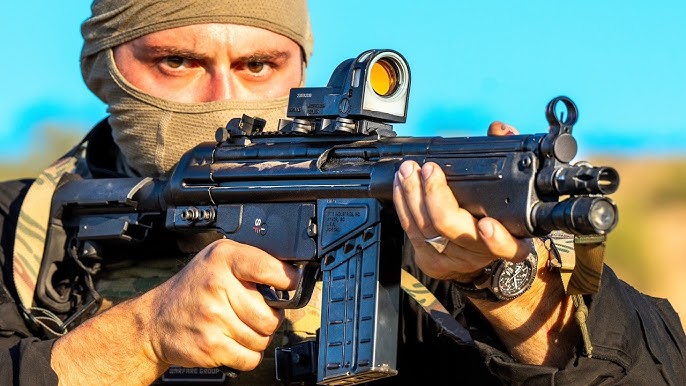
Also, while Marines routinely conducted CQB with their big old M4A4 muskets in the GWOT, I’m sure they would have preferred an M4. That less-than-optimal sizing goes double for this chunky monkey. Some police departments thought they could beat the system and run SBR G3 clones. However, they quickly realized firing a 308 inside a shoot house out of a short barrel concussed you so bad, even with hearing protection, that you wanted to die a little. At least one video out there shows how brutal this setup is, even outside.
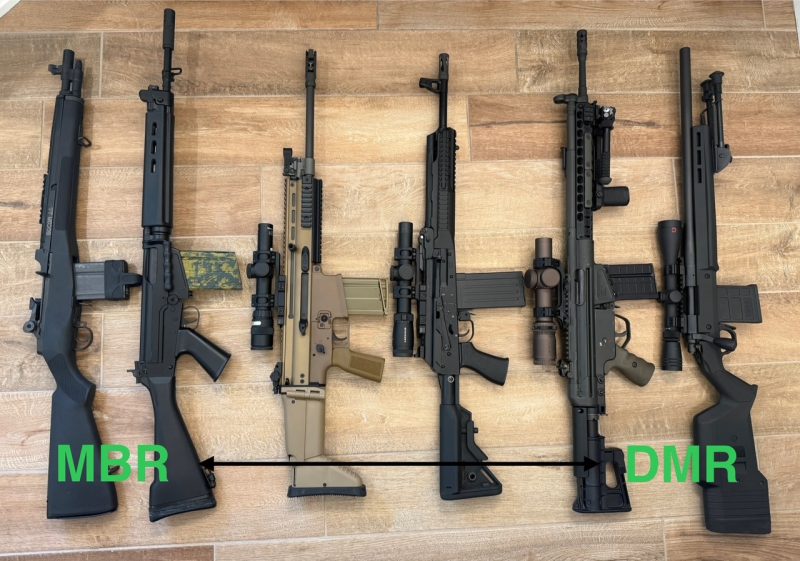
So, where does this fall on my super scientific, not at all completely made up, and arbitrary Main Battle Rifle to Designated Marksmen Rifle scale (MBR2DMRS for short)? Well, right about here:
Final Thoughts
So, you once again have survived the ramblings of a guy on the internet with an opinion, and what have you learned? Well, at a minimum, you learned of a new way to blow your hard-earned cash while justifying it as a “necessary build” to keep your family alive in the apocalypse. Whether you agree, of course, is another matter.
I hope you also considered a different take from “just another AR”. I have run this gun 1x with the large red dot and a 4-part ring on at man-sized targets inside 20 yards, and it was devastating (and also a tiring workout). I have also rung 10″ steel at 500 yards so easily off the bipod that I began to think of myself as more capable than I probably am.
Can you do that with your AR? Maybe. Should you do this to your HK91 or PTR-91 if you already own one?
Definitely.
CZVZD

Enter BANG7 at checkout to save a few bucks.



Great article and build. I’ve built my own concept of a MBR/DMR
using a 16” CMMG Dissent Br3 as the platform. My inspiration was to modernize the Shughart M14 while keeping a similar aesthetic. Sig Tango MSR 1-10x LPVO, 45° offset irons, B5 Vertical Grip, Magpul Bipod and B&T SRBS 762 Ti suppressor.
That sounds way cool, thanks for sharing! Where would you put it on my super scientific MBR to DMR scale now that you have run it a bit? In other words, is it more MBR or DMR or right in the middle doing both equally well?
What a fine article.
But what would you think of an AR-10, or a heavier AR-15, for this purpose, as Americans are more familiar with them? Or even an M1A?
Hey Stephen, I’m glad you enjoyed the write-up. I think you make an excellent point, the AR-10 is probably America’s DMR-MBR. It has been my experience historically that to get one that really ran well, you had to spend Knight’s Armament type money. I was super hopeful over the release of the PSA M110 clone recently, and while I have no firsthand experience, some of the people whose opinion I have come to trust seemed to have found that it continues to suffer from the affordable AR-10 woes. As to the M1A, I think a Squad Scout-length barrel in something like a Vltor chassis could fit the form factor. However, in my samples, I find them to be a 2-3 MOA gun using surplus ammo (National match guns shooting match ammo are certainly MUCH better), and we are talking about a nearly $2,000 base gun. So, from an affordability and DMR-role suitability, I would prefer the G3-like platform. I don’t think there is a wrong answer though, and in the right hands, many rifles, with many optics configurations, could do the work. After all, it was the Indians and not the arrows that killed the cowboys.