
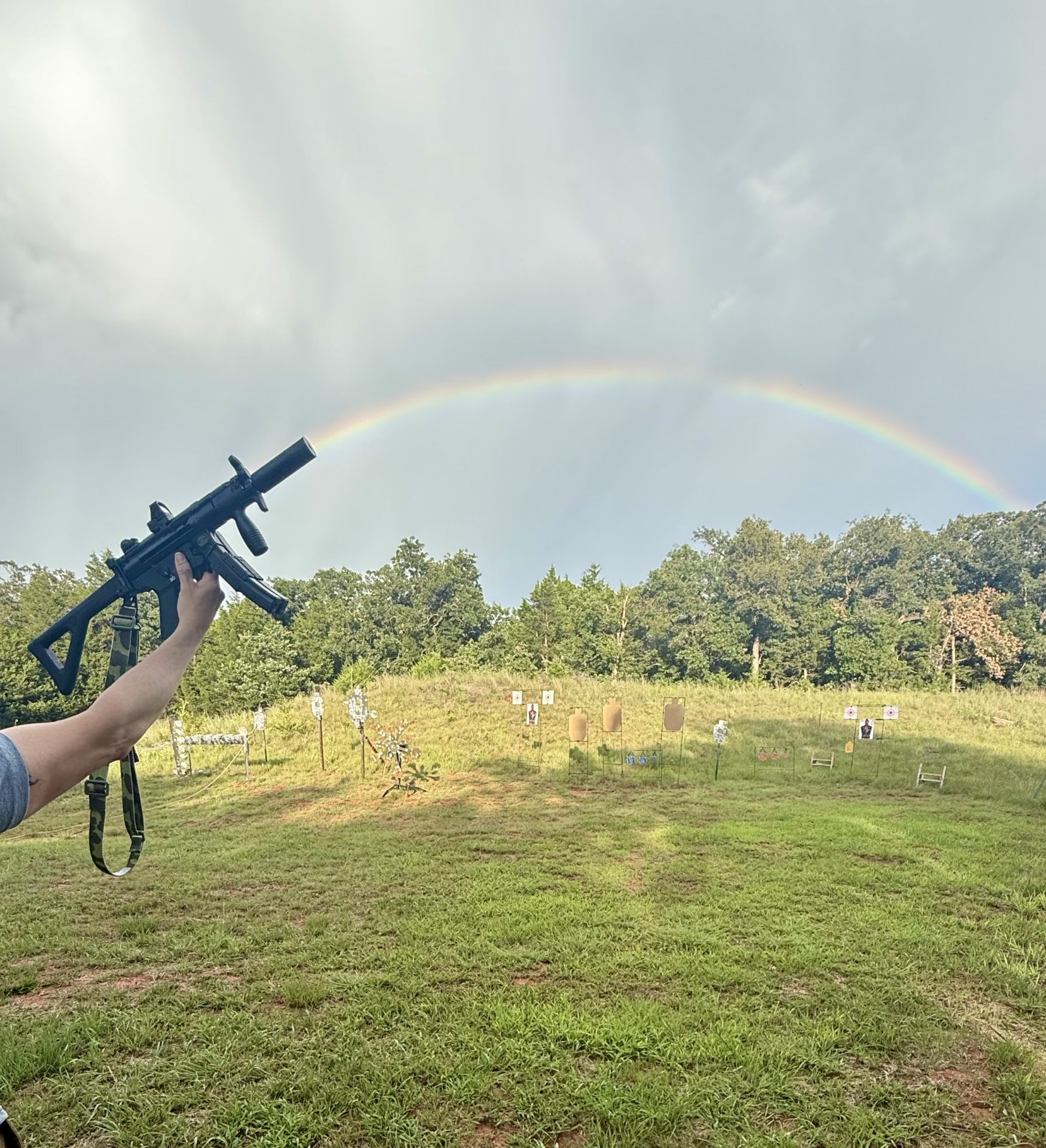
If you have been following me for a while, you know the 10mm Stribog popped my PCC (and short barrel rifle) cherry. It made me willing to explore the concept in ways I hadn’t before. Still, a pistol-caliber carbine in 9mm (like the SP5) was a bridge too far… until the advent of the FRT.
I’m only the millionth guy to say this, but a Forced Reset Trigger turns PCCs back into the subguns they were designed to be, and therefore useful again. That said, there is perhaps no better PCC host for an FRT than one of the subguns most renowned for being soft-shooting and reliable: the HK SP5 (and SP5K).
Finally picking one up is a dream come true and one that I spent the last 25 years of my gun-owning life thinking would never be possible. More on that below.
Which Way Western Man?
I debated two roads to this build. One was a super-futuristic build trying to bolt on all the modern ergonomics possible, and the second, which I took, was to keep the old-school cool. I took a very “restomod” approach with these guns for those car guys out there.
For those few people who are somehow into guns but not cars (or watches), this involves taking a classic vehicle (or in this case, a gun) and building it to maintain its vintage appearance but modified with modern components for better performance.
And since I was going with authentic, I wanted the real HK. Some clones may be fine, but after weeks of conflicting reviews on various makers, I decided to splurge on the real deal. That would save me wondering later, “What if I had spent a little more for the real thing?”
They say you’ll regret the things you didn’t do more than the things you did; for me, not buying a real HK won’t be one of them. I mean, we all know HK isn’t happy until we’re unhappy, so how much longer will they even let us have these civilian MP5s? Recent press releases from them have already spelled out a freeze on new civilian shipments to prioritize backorders on LE and Mil contracts.
To be fair, while you’ll get mixed opinions on the clones when searching, some seem to work great if you replace just a few inexpensive parts with factory HK ones – like the ejector (when you can ever find one in stock), for instance and the extractor spring. Others unfortunately seem to work okay to start but then beat themselves to pieces under the new rigors of an FRT, where traditional semiautomatic fire may never have revealed this.
Anyway, I bought once (well, twice if you count the second full-size SP5 I bought because I loved my K so much) and cried once (twice).
HK MP5: Expensive Barbie Doll for Men
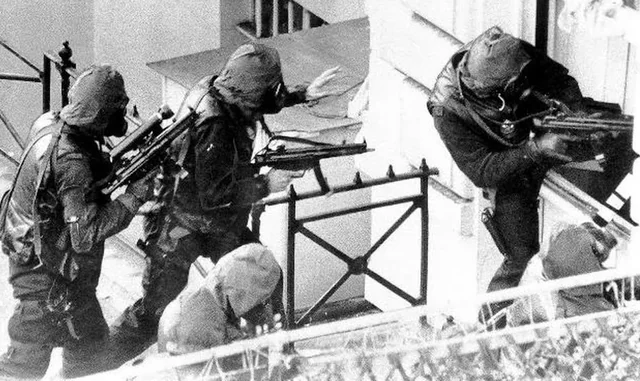
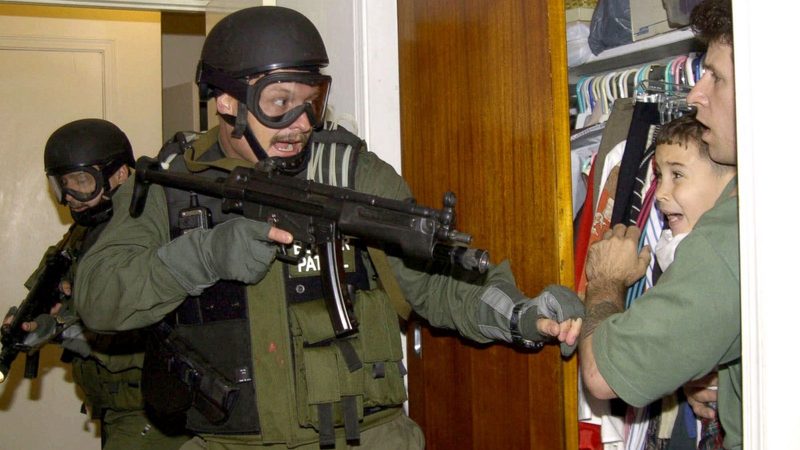
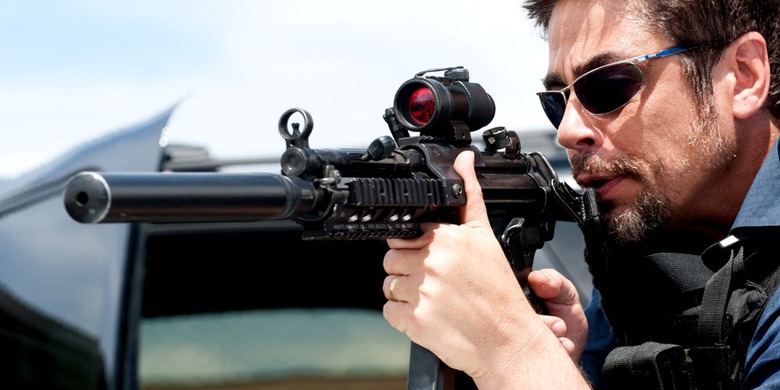
The best (and perhaps worst for your wallet) thing about the HK MP5 is the variety of classic clone build routes you can take. You don’t spend 60 years as an icon without having some truly badass moments. Here are a few of my favs:
The Basic B Parts on the K
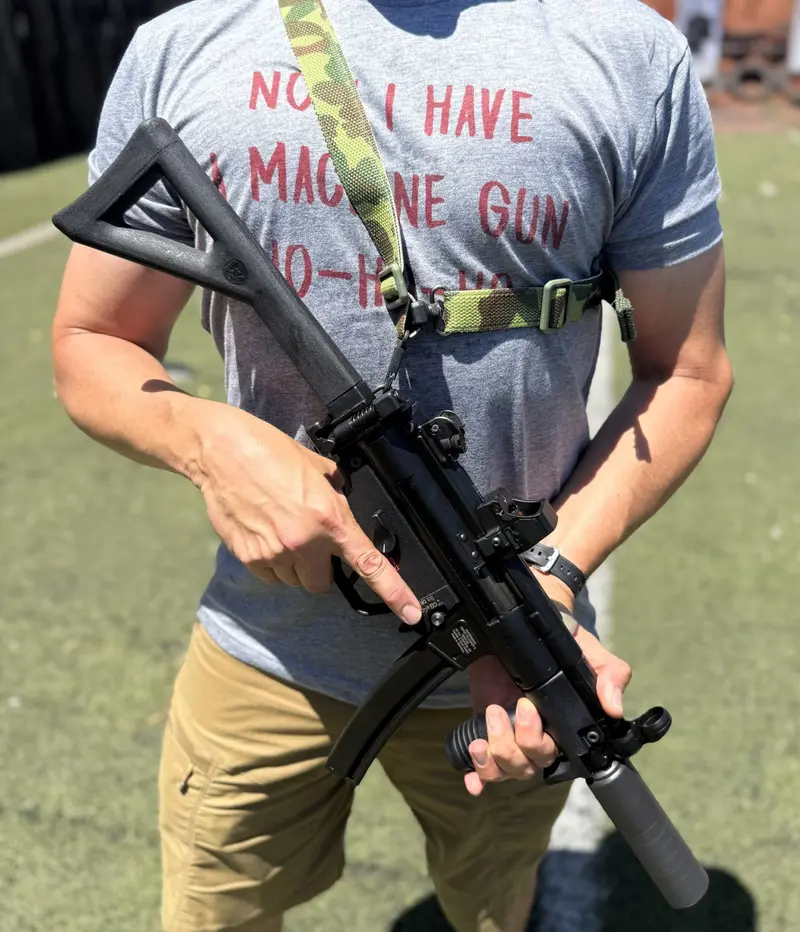
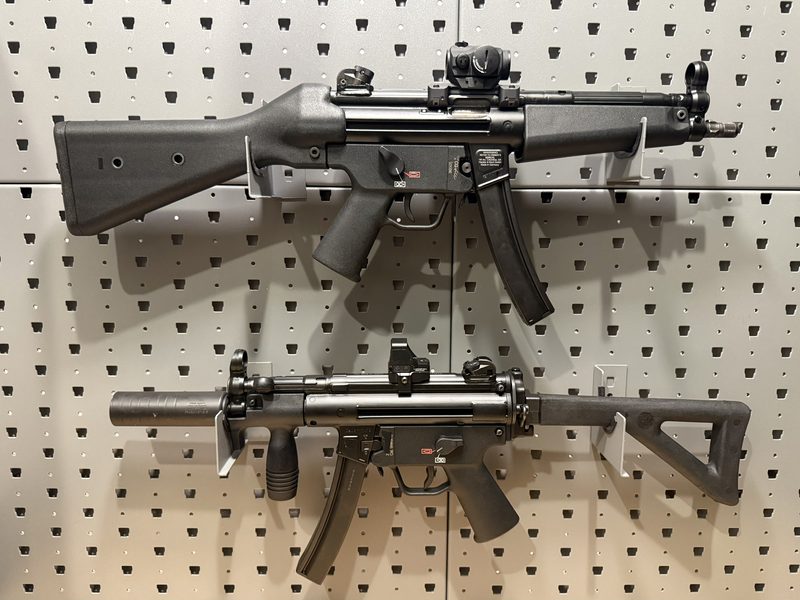
At the time I decided, “If I can only have one, I want the K.” It is unique in its ability to maintain relatively uncompromised stability despite its almost startling compactness. Starting off and keeping with tradition, I walked the well-worn build path of going with the Choate folding stock. This is an HK-branded one I paid a premium for after hearing some non-branded ones had a bit of play. Thankfully I didn’t have to sell a kidney (or two) as you do for a factory-new A3 stock (which doesn’t fit the K anyway), and the lockup is tighter than the special needs kid’s grip on the class pet rabbit.
The LOP is longer than some other options with no adjustment but fits me great; I also find the cheek weld to be great for a variety of optic mounting heights. So, it not only passes the vibe check but is a solid performer when shooting.
Next is the near 50-year-old design of the HK VFG. I thought about the version with a side rail and pressure grip cut out but ultimately opted not to run a light on this gun and all the nightmare logistics that go with putting one on a K. At less than $40, this might be the cheapest thing HK makes.
Unfortunately, the internet just told me VFGs aren’t cool anymore. Sigh.
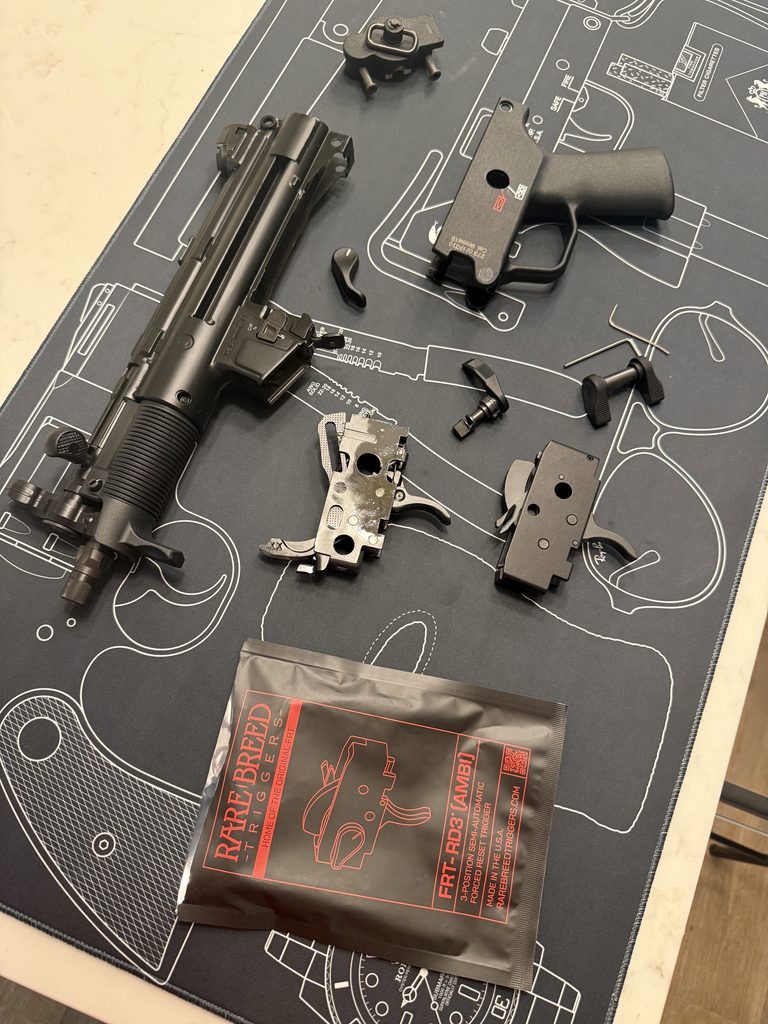
The Rare Breed FRT keeps the factory lower, so it’s good to go there if you’re trying to keep a factory look (in this case with a “Navy” lower). It’s a minor thing, but the RB safety levers (ambi) have the factory-like channel on them but no white markers. So, I shoved my white paint pen against the start of the groove and let gravity fill the space. It came out miraculously clean and now is indistinguishable from the ones that came on it, other than the fact that they are shorter in overall length.
I can still reach them with my long monkey thumbs, but given how far they need to travel to reach the third/FRT position, I find myself “sweeping” the lever on the right side of the gun with the meat of my palm between my thumb and index finger. If I had my druthers (and if there’s one thing I like, it’s my druthers), I would run the extended lever on the left for my thumb and the RB one on the right so it doesn’t get in the way of my trigger finger in the FRT position.
But alas, there is no provision for that setup, and ergo no druthers-having for me.
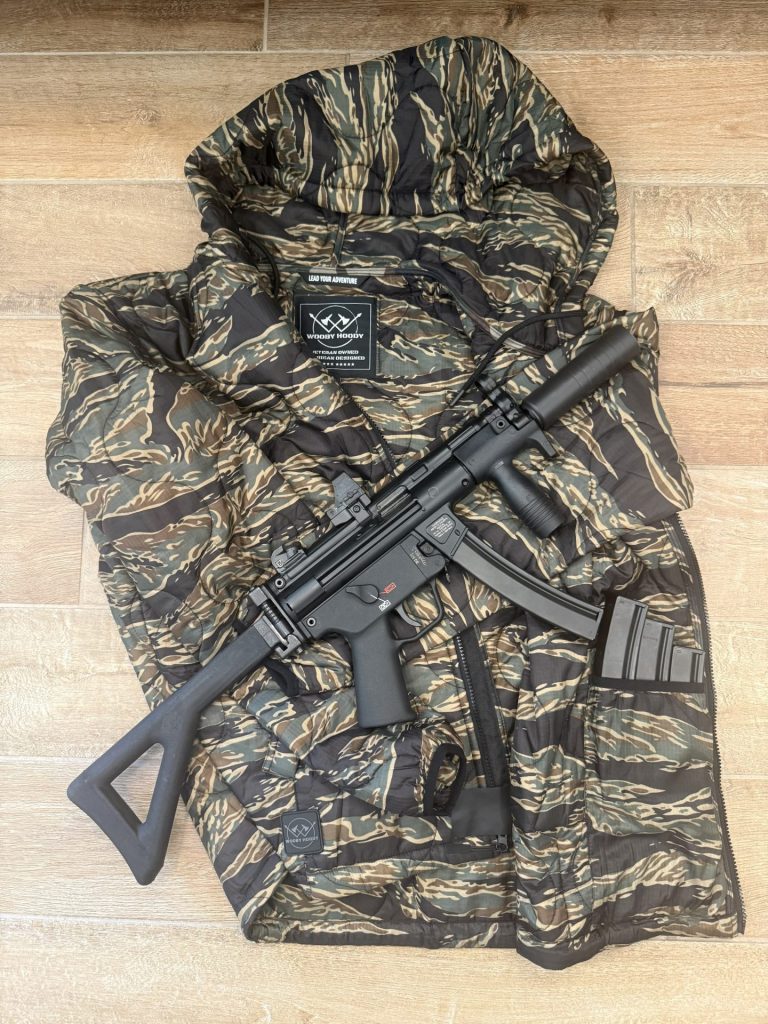
The K is dead sexy being as compact as it is, but it is double extra sexy with a can on it. In my mind, there was only one option: the SilencerCo Omega 9K. This thing is compact, delivers great sound suppression and heat absorption from rapid fire, and weighs a ton, putting weight where I want it on the gun to help control recoil. Specific to the K, it snugs down right against the handguard in an exceptionally visually appealing way that other options don’t.
The only downside is that this extremely reasonably priced can has no way to be ordered with a 3-lug adapter installed so you add well over a $100 to it for one of its most common applications.
SilencerCo, what can we do about this?
I’ll go more in-depth below under “This is not your AR,” but I went with a 90-degree locking piece. Keep reading to understand why and what one even is.
After piecing it together with only an exception made for an unobtrusive red dot, I realized HK got it pretty right over 50 years ago.
Would My Life Be Better with 3 More Inches?
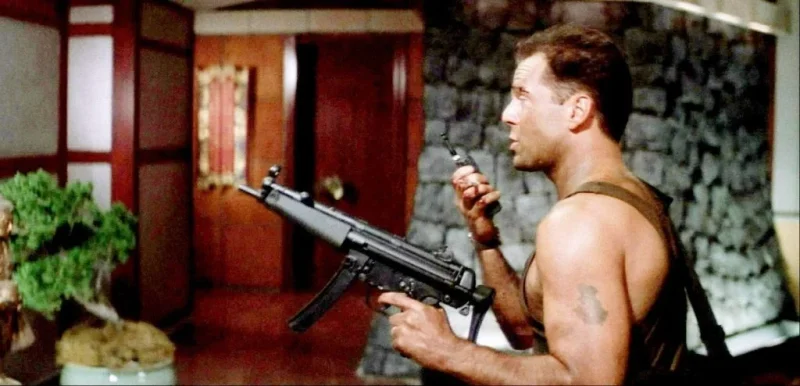
The K with the RB FRT exceeded my expectations so greatly that I had to know if the full size was as good or better. I mean, my Die Hard movie obsession alone demanded I get that form factor. Here the build was straighter forward in a way.
I knew I wanted the softest shooting version, so I bought the HK A2 fixed stock. I did end up getting the MKE A3 because as they say, “A3 for the Gram, A2 for the range”. While I stuck almost exclusively to HK parts, including a dozen spare magazines, I have to give praise to the MKE A3 stock. It looks replica-correct and locks up tight both collapsed and extended.
I was very pleased to pick it up for $600-800 less than an HK one, even though I will rarely use it because of the A2 anyway.
You know you are on your way to being an MP5 connoisseur the day you stumble down the rabbit hole and realize the A3F stock isn’t the same as the original A3 stock, and people care a lot about the differences.
I also finally gave in and bought the Surefire handguard. I went with the Surefire 328 MP5 light because it keeps the gun shorter, and clone-correct accuracy wasn’t my goal. I mean, I like that vintage look of the flashlight extending past the barrel, but I don’t want to live with 60 lumens just to LARP.
Happily, this light is really good.
As I continue my quest to make my suburban neighbors wonder what the hell I am doing in my backyard at times, I tested it at night against my Scout Mini and X300 pistol lights (both “U” and “T” models). This thing has a wonderfully wide flood beam that somehow still goes long distances. It is probably because, while it has half the lumens (500 vs 1,000) of the 628, it has almost 75% of the candela (7,600 vs 10,600).
It might also be magic put in there by a wizard; no one knows for sure.
Additionally, because of where it sits, there is zero shadow from the barrel, and it’s in a place that doesn’t add bulk or snag points to the gun’s profile, as a light hung off one side would. The controls, additionally, are the best of both worlds. The right-side momentary on-pressure pad has a gate beneath it to help index, keeping your hand off it until you’re ready to use it, and the left side lets you throw the switch to stay on. It’s easily reachable but not in the way of your grip if you want to keep your hand off it.
If you have been on the fence about laying down the cash this light setup demands, I would say it is well worth it for the performance, plus the looks (which admittedly is what drew me in to start).
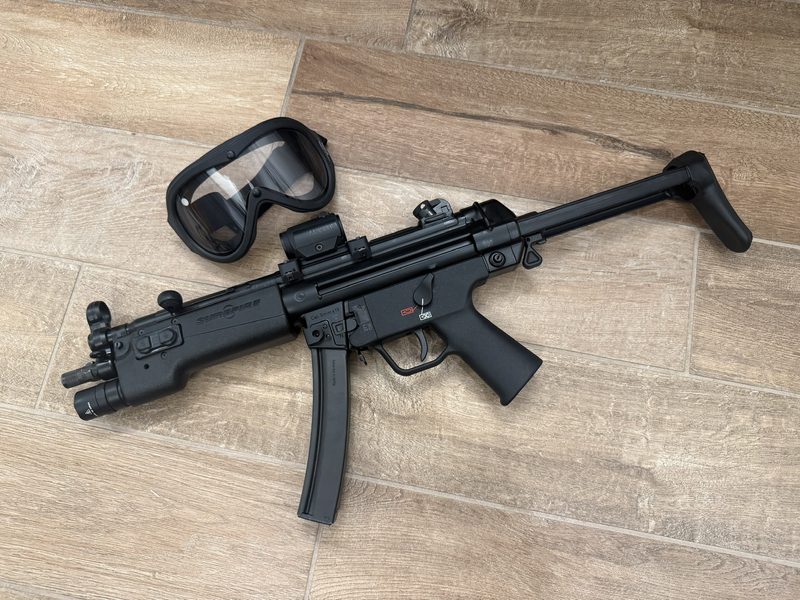
Lastly, because of the extra inch of receiver (over the K), the 100-degree locking piece is safe for the receiver and gives the FRT a reasonable cyclic rate. HK ships with a 100, and the manual says it’s good to go, but be aware some clones have as high as 120-degree LPs.
That Dot Though!
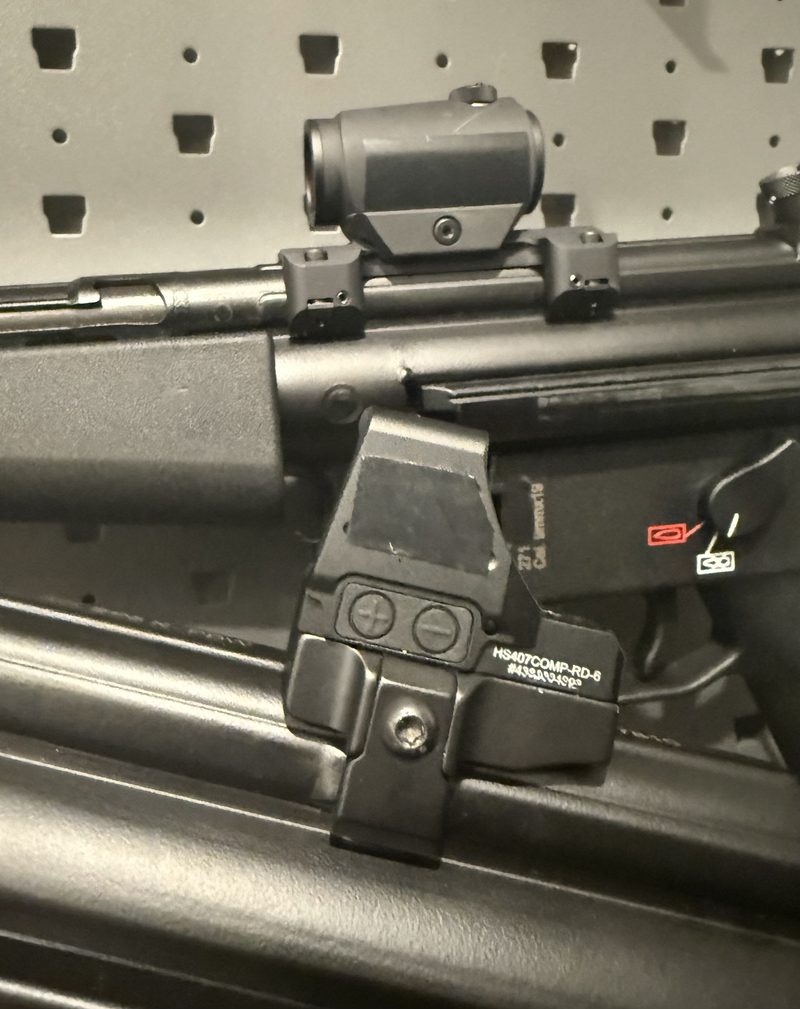
My guns all get run. So while this was a vintage build, I want my dot. I discovered HK Parts makes a single-claw attachment mount for several common dot footprints. People may laugh at my choice of a cheap Holosun 407 Comp dot on an otherwise rather expensive premium gun, but it checked all the boxes. I wanted a compact pistol dot, but with as much window as I could get. Between the 507 and 407 models, I knew I would never want to use the other reticles that came with the more expensive version. I have been very happy with it, and like all Holosuns I own, there have been no issues.
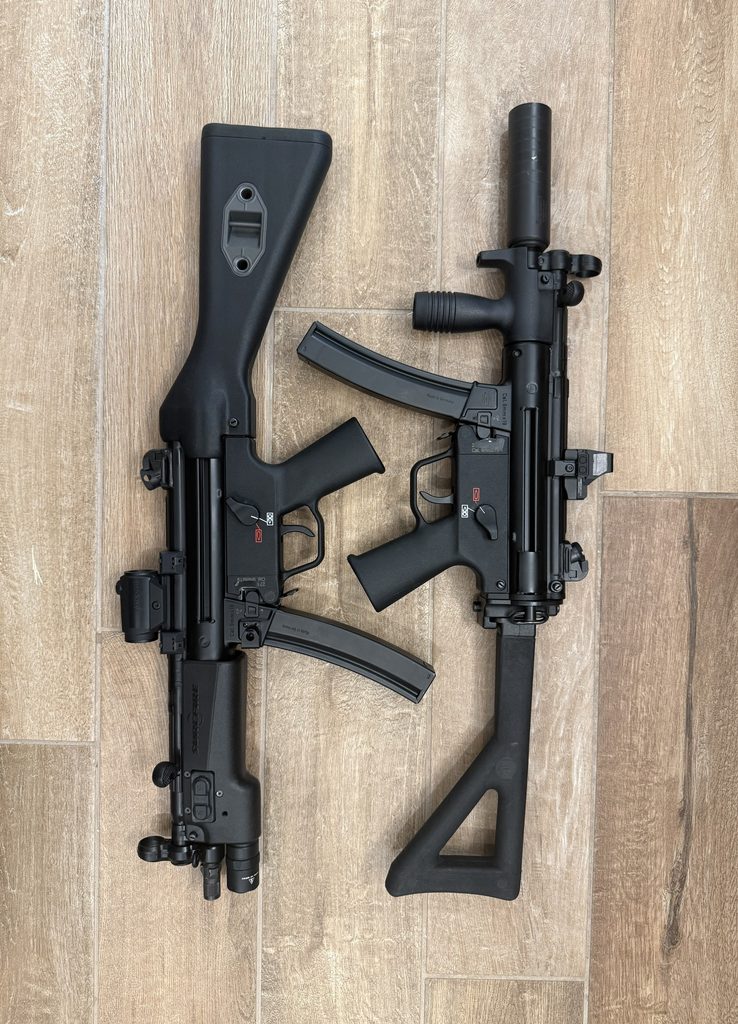
Pictured behind it (below) is the Aimpoint Micro on my full-size SP5 (optic snobs can rejoice). I stayed with a low mount (or “ultra low” as MFI calls it). Both this and the Holosun on the K allow for easy co-witnessing, comfortable check welds, and minimal holdover when aiming.
I tried the popular Scalarworks mount setup on top of the MFI rail mount, which lets you see the irons through the risers and get a higher dot, but ultimately it didn’t do it for me. The added benefit is that now both guns have a similar sight picture and holdover, more or less.
FRT go Brrrrrt
Unless you have been living under a rock, you’ve heard of Forced Reset Triggers by now. I’ll admit, after realizing what a pile of garbage Bump Stocks were (before “the most pro Second Amendment president in history” banned them), I was hesitant to get my hopes up on this new way to keep the ATF up at night. I’ll get into more about the Rare Breed RD-3 below, but just know you’re a gay retard (and not the good kind) if you have a PCC without an FRT in it.
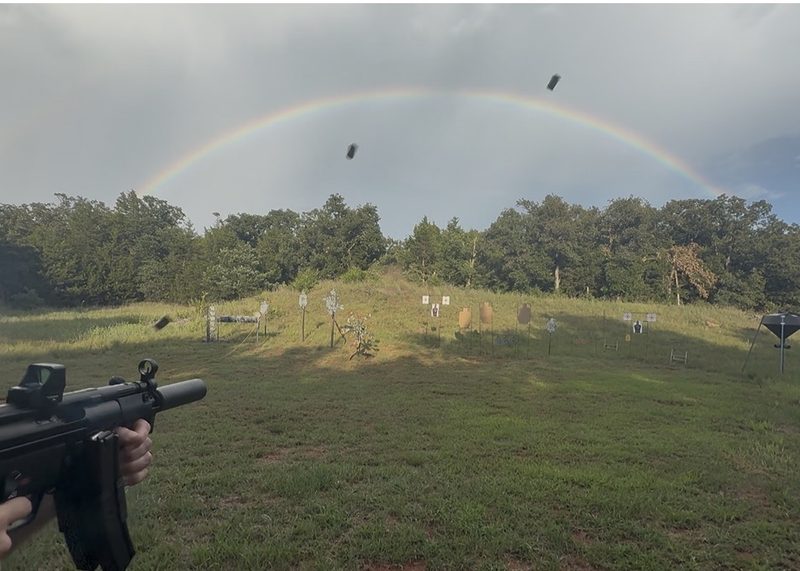
PCCs made no sense to me until FRTs came out, and this Rare Breed restores the gun to 99% of what it should be. Reliability is off the charts. I have run this gun with 124-grain and 147-grain rounds, both suppressed and unsuppressed, with about six different manufacturers. Flat nose, round nose, little bursts, full 30-round mag dumps, and I have had exactly zero malfunctions with HK magazines.
I also haven’t been able to shut the gun down with excessive trigger pressure.
Now I haven’t run the gun with no lube or with 115 grain bullets because that’s not how the gun was designed to run. I don’t run my car with no oil or flat tires to “torture test” it. That would just be ridiculous, and so are the people out there who do the same with guns and say it’s in the name of science.
I’ll give them a pass if they cleaned and lubed the gun and then wanted to see how many rounds they could go before stoppages required cleaning for real-world endurance concerns. For me, I have run this gun suppressed (in other words, the quickest way to get the internals dirty) for over 400 rounds before cleaning with no stoppages. I didn’t go farther because if I have to rely on this gun to run over 400 rounds without being able to clean it, I am having a really bad day. I mean, how did I have time to reload magazines (the 12 I have only get me to 360 rounds) in this apocalypse scenario but not time to at least dump some more oil on the bolt carrier?
One note: while the factory HK lockup between the upper and lower receiver is rock solid, there is a little play after RB. Part of this comes down to HK not giving us peon civilians a second pin, but there has been zero impact to reliability, so I haven’t gone the route some others have taken of putting some version of a shim in there.
This is not like your AR
Unless you already own a G3/HK91 or similar, this whole roller-delayed blowback system is alien to you. Once you dig into it and learn a few tips and tricks, though, it is surprisingly easy to work on.
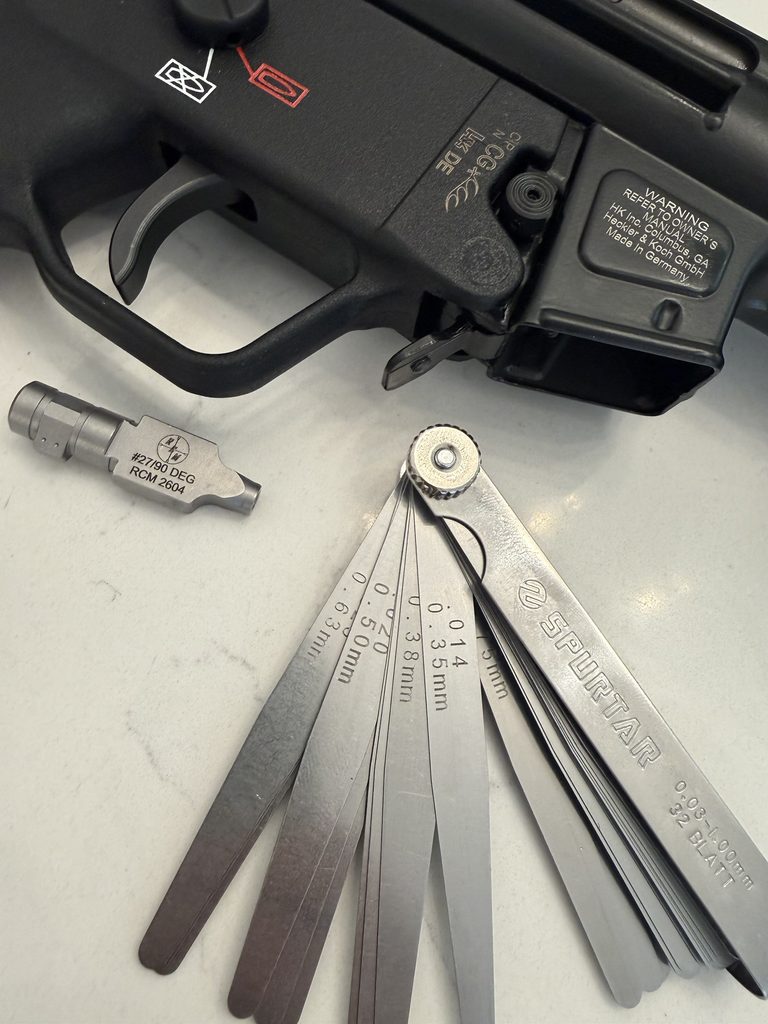
AR guy surprise number 1: Head spacing. Old M1A shooters know about this, but we have grown used to the AR’s bolt design that allows virtually any AR bolt to go in virtually any AR with no checks or tuning. Not so with the MP5 platform! Here, when you make modifications or start getting high round counts, you need to buy some inexpensive feeler gauges and check the bolt gap.
This isn’t hard, and plenty of videos exist out there to show you how and explain how to remedy being over or under (much of which involves inexpensive, easy-to-install new rollers designed to adjust the gap).
The other big debate that rages on the MP5 corners of Reddit is the Locking Piece (usually just referenced as the “LP”). I would say do your own research but the info out there is all over the board. Plenty of people say, “Mine runs great with this,” while the next guy says, “Mine won’t cycle at all,” with the “same” setup. I put “same” in quotes because they often aren’t talking about the same gun maker or the same ammo.
Thirty-second explanation and my experience: The Locking piece determines how quickly the gun unlocks; the lower the degree, the slower it unlocks (more delay in the “roller delayed” thingy) and the lighter the gun feels on recoil. The full-size SP5 and SP5K come from the factory with a 100-degree LP (clones vary wildly). The HK manual recommends an 80-degree locking piece if you plan to shoot the K suppressed all the time with 150+ grain heavy bullets.
However, because I wanted a gun that could run suppressed or unsuppressed on only the 124- or 147-grain 9mm I stock in my personal logistics chain, I went with the 90-degree as a nice middle ground. Again, this makes the gun unlock more slowly, taming the cyclic rate under a Forced Reset Trigger, especially with the added backpressure of a can.
This matters for controllability and because the K has a one-inch shorter receiver than the full-size MP5 as originally designed, so there is less room for the gun to accommodate bolt travel. Too fast a rearward bolt travel can allegedly leave roller dents in your receiver, which would be no bueno.
So far, the 90-degree locking piece has worked literally flawlessly with no sign of roller dents with close to 1,500 rounds through it at this point. I try to use all HK parts when possible, but the HK LPs are never in stock, so I went with the highly recommended (and much cheaper) RCM unit.
Pro tip: the RCM website “out of stock” alert doesn’t work well, but AS Design’s does. These come back in stock regularly, unlike the HK ones, so expect at most a few days’ wait. Installation takes seconds as part of any routine bolt disassembly/reassembly for cleaning.
Ammo Sponsor
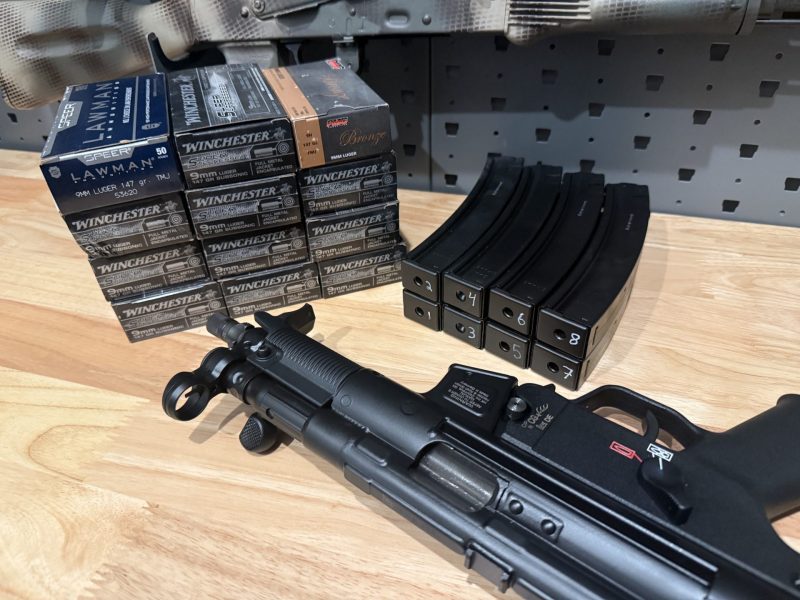
Part of my FRT testing has been around reliability. I wanted a build that could run 124 to 147 grain super to subsonic rounds with the suppressor on or off without a hiccup… ever. To know if that was the case, I needed not just hundreds of rounds but hundreds of rounds of different manufacturers and bullet weights.
Ammunition To Go came through for me again with a mix of some very premium, “clean” shooting rounds designed specifically for high-round-count suppressor use, as well as some run-of-the-mill range stuff. I added this haul to my pile of 9mm I bought with my own wampum, and to date, I can say this gun is unstoppable.
Final Thoughts
This is the best gun ever.
I’m not sure there is another gun out there with this high a fun factor while still being something you can shoot regularly at nearly any range for cheap…or at least as cheap as roughly 8-900 rounds a minute of ammo can be.
One other component of the MP5 (and in this case the MP5K) that I didn’t touch on is accuracy. This is just a 5.8-inch barrel, barely longer than your full-size 2011 or 1911 and yet it is shockingly accurate at distance. I touched on it a bit in my bag gun article, but this setup, while only being marginally larger, gives you not only the stability of a stocked (or braced weapon) to make more precise hits at 25 and 50 (and beyond) yards, but the roller-delayed system and Kraut barrel magic make for an extremely inherently mechanically accurate gun. 1.5-inch groups at 25 yards are scary easy and had me running steel plate racks at an impressive pace on the standard semi-auto position.
If you have been on the fence about jumping into both the PCC and FRT world, here’s your sign to do it. It will be like nothing else you already own, and the practicality mixed with the fun it provides can’t be beat.
The big question is, if I could only have one, which would it be? The answer is the K.
While not as soft-shooting (but still very soft) and having more cramped controls, it is just way too cool and compact in a way virtually nothing else is. If you can’t decide between one and the other and be at peace, then you’re like me; realize people out there are doing MP5SD conversions (want)!
GISD
A variety of fits for a variety of guns for a variety of optics for a variety of carry styles!



0 Comments