
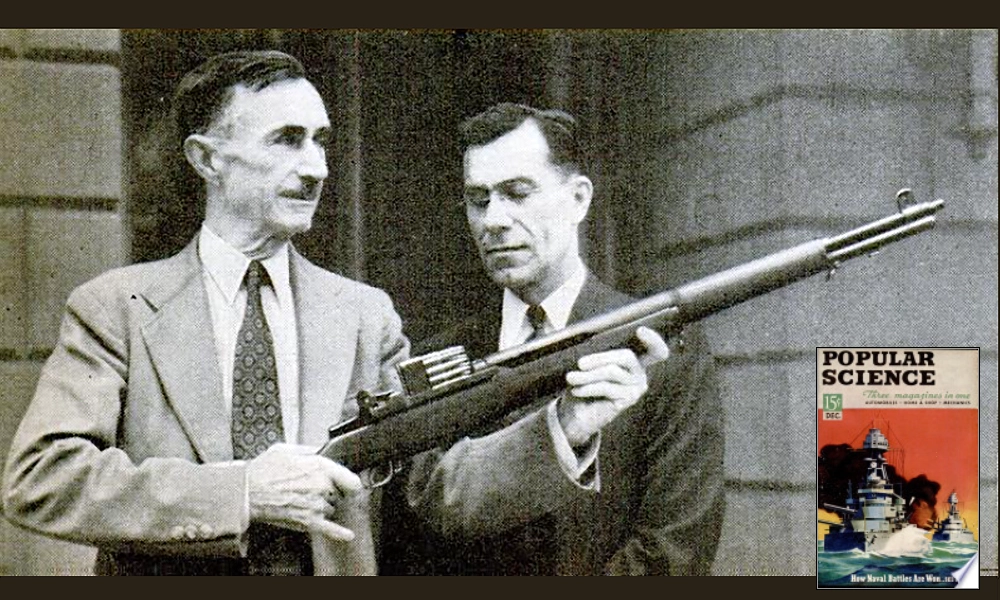
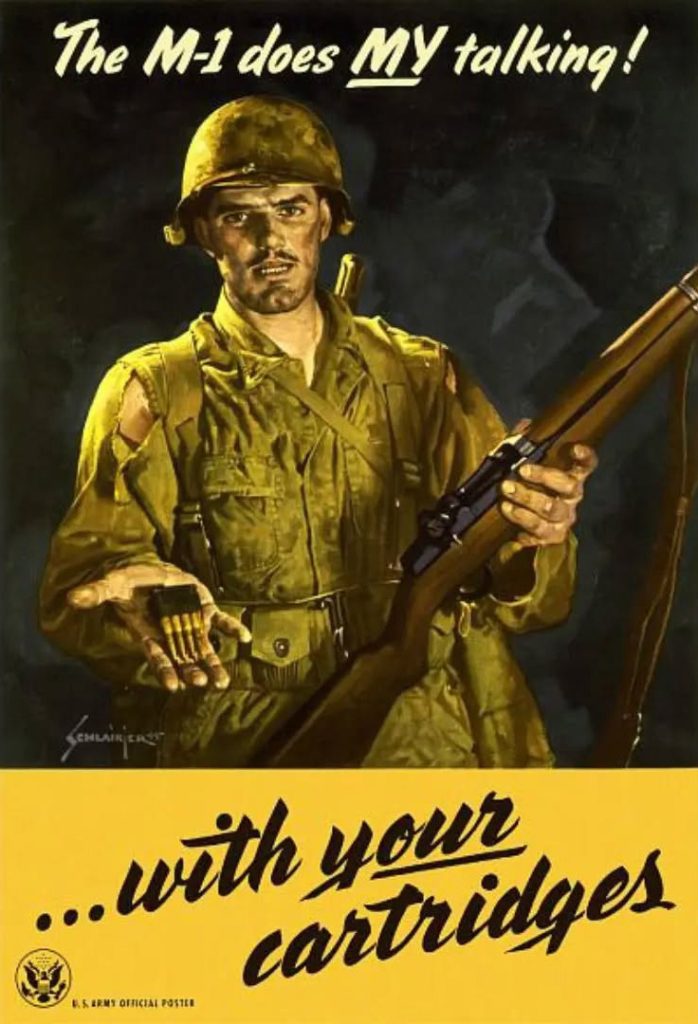
Today In Guns, 01 January 1888 (a Sunday). Today in Guns, back in 1888, a young man named Jean Cantius Garand was born in Quebec, Canada. You may remember him as Mr. John Garand, designer of the weapon described by Lt. Gen. George S. Patton Jr. as the “…greatest battle implement ever devised.” I’m talking, of course, about the venerable M1 Garand semi-automatic rifle.
Estimated reading time: 4 minutes
Feature photo, above: John C. Garand looks on as Col. G.H. Stewart, Commander of the Springfield Armory, examines an M1 rifle. Image courtesy of Popular Science Magazine, December 1940.
The M1 Garand was adopted as the standard-issue U.S. infantry rifle in 1936 and began reaching line units in 1938. Vast numbers of the iconic American battle rifles were produced and used by Allied forces by the end of WWII…a gun developed by a Canadian-born inventor, though he was a U.S. citizen by then.
John Garand
John C. Garand was one of twelve children. He had six sisters and five brothers. All of the latter were identically named St. Jean le Baptiste, a hundred years before George Foreman made it cool. The young inventor was the only one of the boys who actually went by John; his brothers all answered to their middle names. After John’s mother died in 1899, the family moved to Connecticut; he later found work in Rhode Island and then in New York.
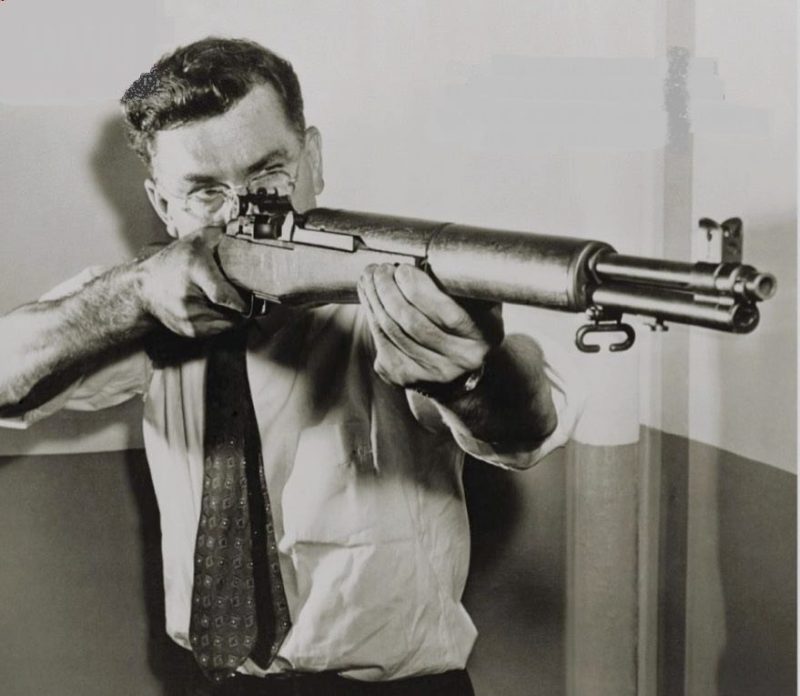
When Garand became a naturalized United States citizen in 1920, he’d already been working for years on the rifle that would bear his name. The weapon took nearly fifteen years to develop and would be carried by American Soldiers, Marines, and Sailors in three wars.
The M1 Garand
The M1 Rifle was patented by Garand in 1932. On August 3rd, 1933, the prototype rifle was officially designated the “semi-automatic rifle, caliber 30, M1.” It was the first successful semi-automatic rifle adopted as a primary service rifle by a major military power.
John C. Garand: Excerpt from a Contemporary Magazine Article
“The United States Government is laying a $15,000,000 bet that the new Garand semiautomatic rifle is the deadliest firearm ever invented. At the great, sprawling Springfield, Mass., Armory originally established by George Washington, Garand Guns by the thousands are whizzing off the production lines, while outside, swarms of workmen rush through the construction of a vast addition to the plant.
…
Reams of publicity have carried the news of this rifle to practically every wide-awake U.S. Citizen. But what about the man behind this particular gun? Who is this Garand, and what is he like? How did he happen to invent the weapon that will make every American doughboy a one-man machine-gun nest?” ~ Edwin Teale, Popular Science , December 1940 issue
By the time WWII ended, more than 5 ½ million Garand rifles had been built. Nearly another half million were later produced for use during the Korean War. Over the following decades, M1 Garands were supplied to American allies like South Korea, West Germany, Italy, Japan, Denmark, Iran, and several other countries. It was ultimately replaced as the issued infantry service rifle by the M14 in 1958.
John C Garand retired in 1953 and passed away in 1976. For his work, he was awarded the Meritorious Civilian Service Award, the Alexander L. Holley Medal from the American Society of Mechanical Engineers, and one of the first two Medals of Merit ever awarded.
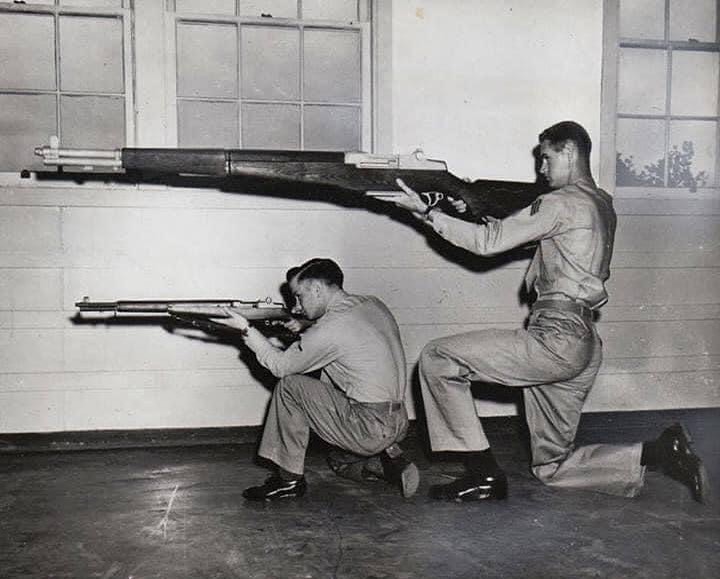
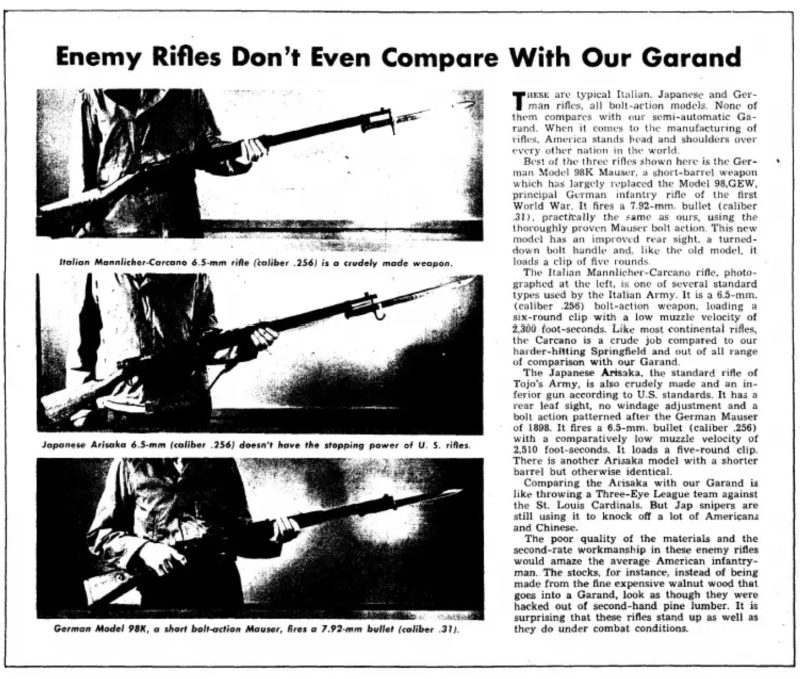
The M1 Garand didn’t win the war by itself. Still, it played an extraordinary, even disproportionate role in the fight, and it all began in a farmhouse near Saint-Rémi, across the St. Lawrence River from Montreal.
And that is what happened TODAY IN GUNS.
Get what you need to play the song of your people! 





During my 4 years active and 4 years active reserve In the USMC, the M1 was my issue weapon. I agree with General Patton. I too think it was the greatest battle weapon ever invented. The Marine Corps standard at that time was 30 well -aimed shots per minute. In actual shooting for record it was 1 minute for ten shots including one reload in one minute from standing to sitting position and ten rounds in 90 seconds with one reload in the prone position. The rifle was loaded with two rounds initially and the reload took place with a full clip. The M1 came with an 11-inch bayonet that made a great all around tool in the days before Leatherman. It could open a can of C-rations, cut a lock off a foot locker or wall locker, assist in digging a fighting hole and was a good instrument for poking holes in people. The 150 grain, copper-jacketed, boat-tailed spitzer pointed bullet traveling at 2750 fps from the muzzle of the M1 made a deep impression on folks who got hit with it out to 600 yards and beyond. As Marines in the 50s, the long range prone position was slow fire at 500 yards. CMP National Match shooting in the 80s was 600 yards prone, 20 rounds. The round was still hypersonic at 600 yards meaning it was moving faster than 1000 fps. With the WWII black tip ammo one could shoot through light armor. The tungsten carbide core was sharp pointed and made a great nail set if one was into wood working. I am sure the black tip ammo would wreak havoc on any aircraft that it managed to impact. Even without ammo or bayonet the M1 at 9.5 pounds made a great fighting weapon. Even if wearing a helmet, if struck on the head with the M1 it would drive the recipient of such a blow to his knees. One can still obtain operable M1s from the Director of Civilian Markmanship program for a lot more than they originally sold for. They range in price according to their condition. A relative bought one years ago and it was in pristine brand new condition. The bolt didn’t even have a mark from the follower on it. He called me in a panic when he discovered the operating rod was bent. I hollered at him “Don’t attempt to straighten it!!!” He said he hadn’t but had called me first. I then explained it was supposed to be bent and he was glad he had called me before attempting to straighten it.
In today’s Canada a “John Garand” would be arrested for creating a world class rifle prototype in a barn…or even discussing it these days! How far down the Liberal nanny state rabbit hole we’ve gone. SAD!